Meals on Wheels Central Texas Intake Redesign
A more relational and holistic intake
Meals on Wheels Central Texas is transitioning into an Aging In Place organization that offers a variety of services beyond meal delivery, yet their Neighbor care system still reflects the tools needed for their funders. Our team redesigned their intake experience to be centered around a holistic user profile that allows onboarding staff to build trust with the Neighbor and surface nuanced needs.
My Contributions
• Conducting fieldwork and stakeholder interviews
• End-to-end ownership of MedGuide
• Deploying our tools to the web
MOWCTX refers to its clients as 'Neighbors' — a framing we kept throughout this project as it shapes how staff approach every interaction.
Team


Client
Meals on Wheels Central Texas
Project Type
Service Design
Role
UX Researcher & Designer
Skills
Fieldwork
Interviews
Mapping
Agentic Coding
Timeline
Jan 2026 · 4 months
Problems
Need-finding varied by staff skills
Intake was centered around eligibility instead of Neighbor needs
No way for the organization to internalize staff workarounds
Deliverables
A context-driven prioritization tool to prepare for the home visit
An AI-powered medical guide
A redesigned home assessment around the 9 Elements of Aging
A structured guide for turning staff experiences into organizational memory
Concept handed off in May 2026 and pilot planned for Q3
The Process
Immersive Research
2
Intake shadowings
4
Recertification shadowings
4
Meal delivery ride-alongs
8
Team interviews
3
C-suite interviews
6
SME interviews
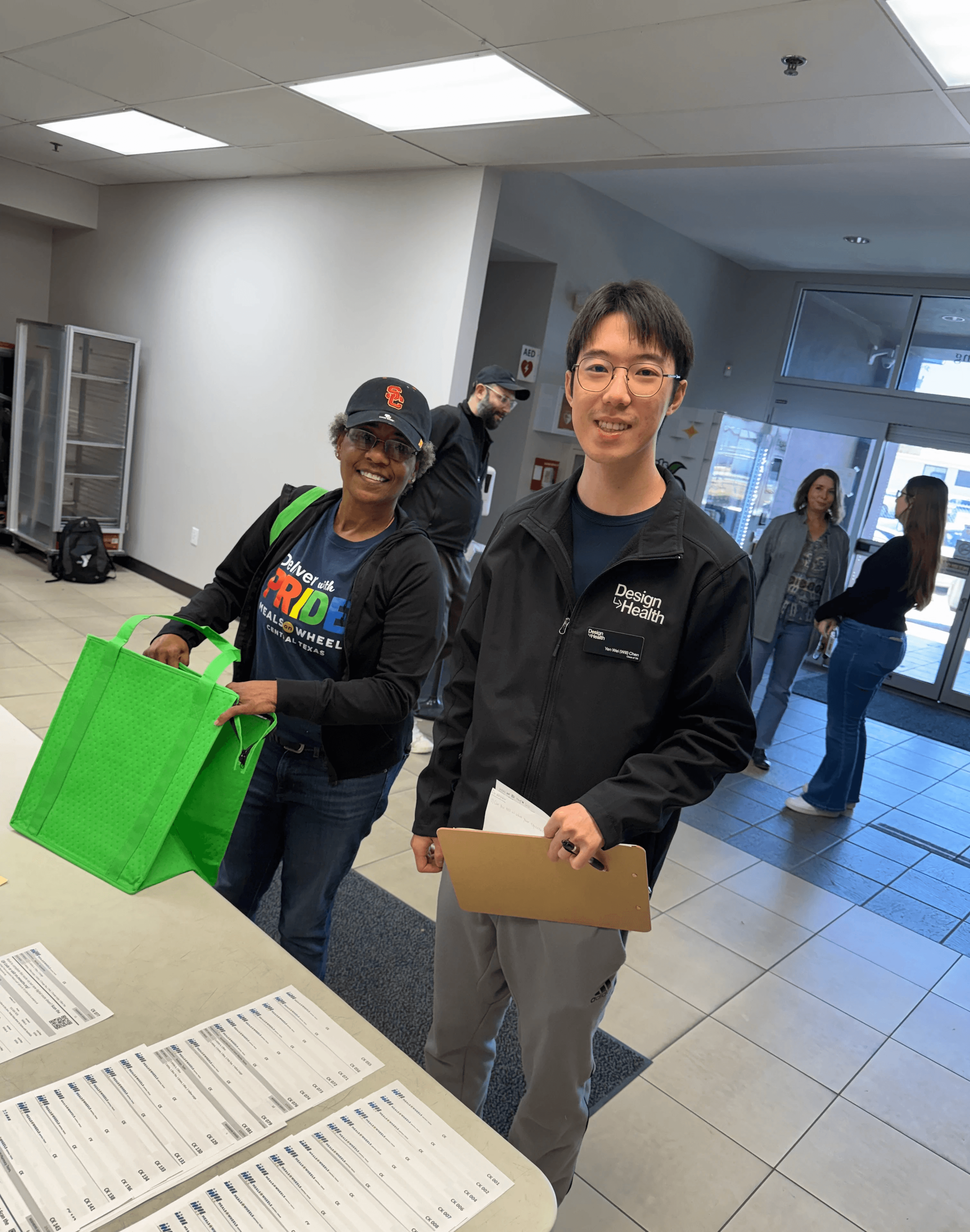
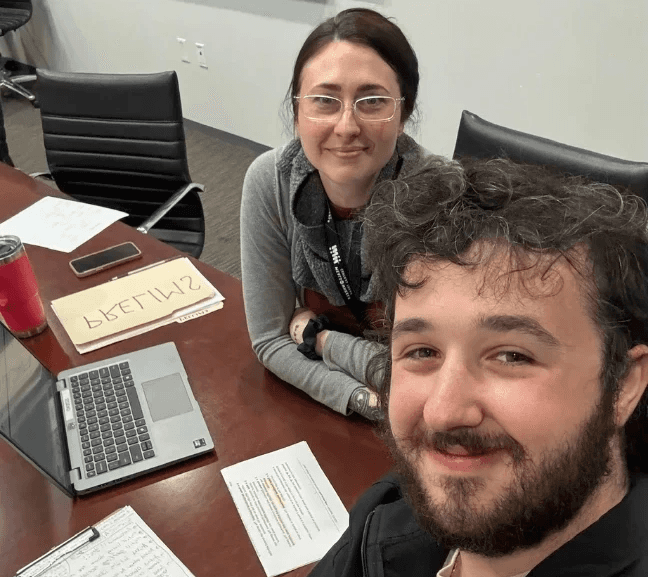
It was important for us to be immersed in the research process, whether that was delivering a meal to a Neighbor, shadowing home intake assessments, or interviewing a MOW team member.
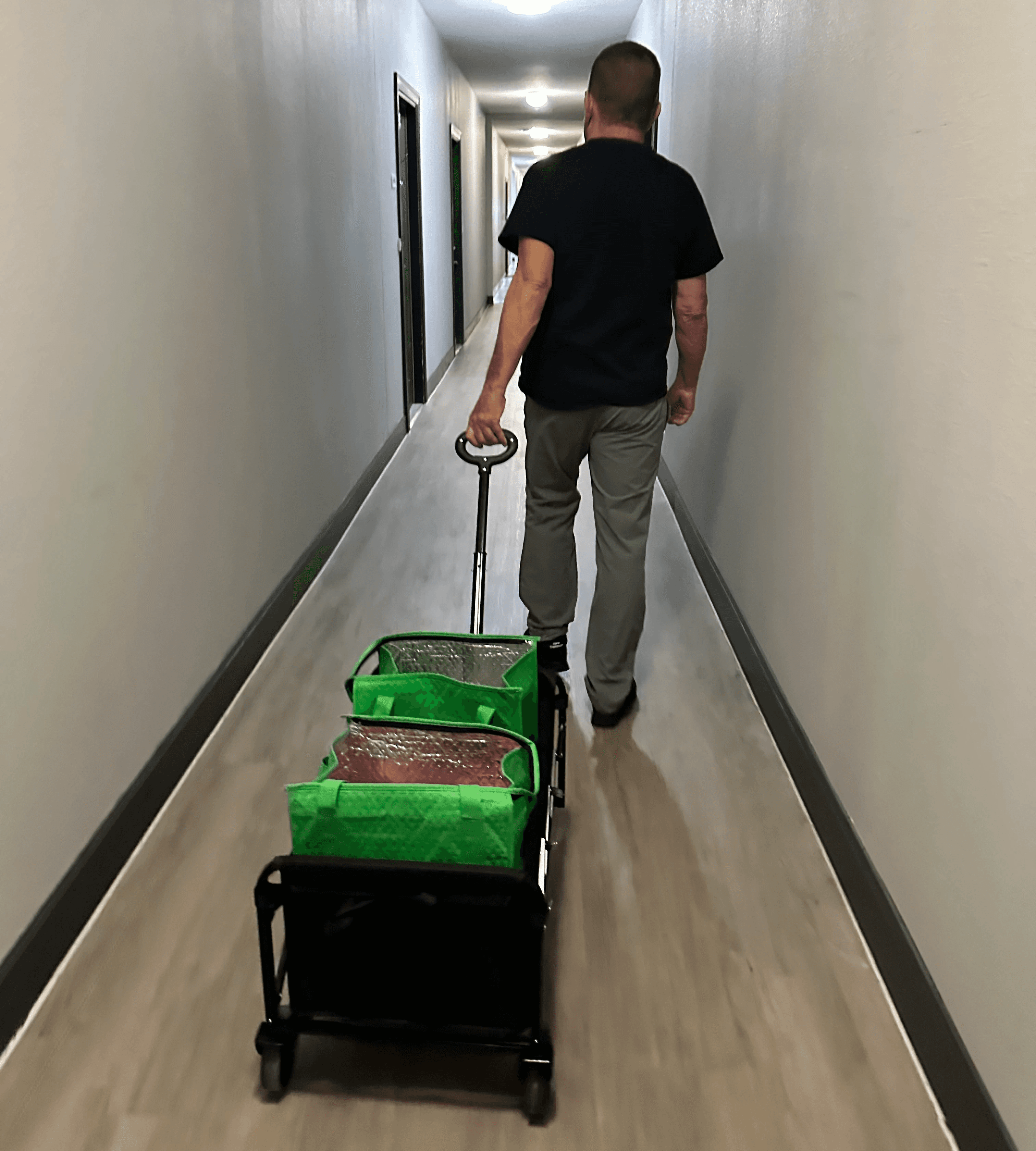
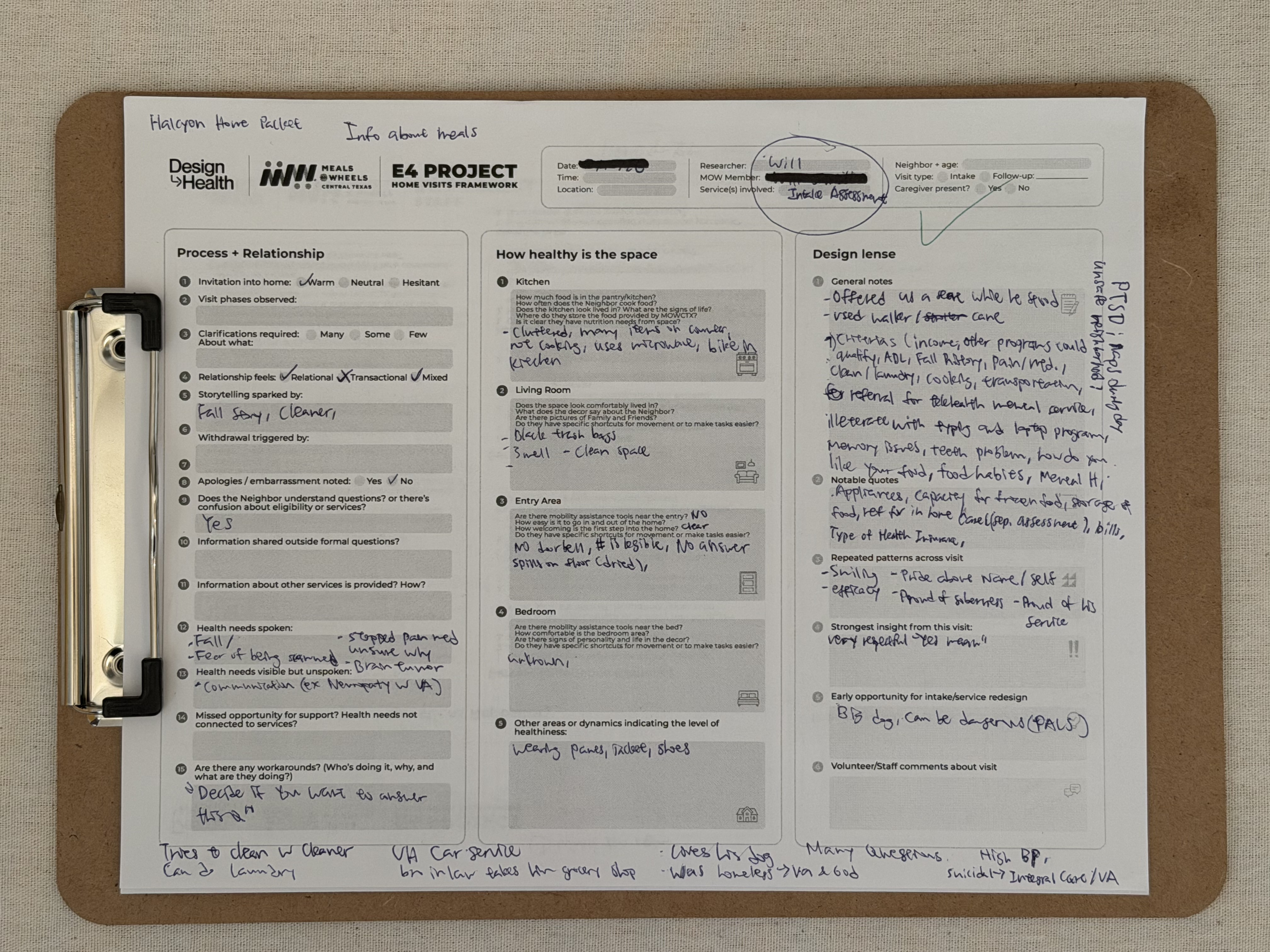
We requested the meal delivery ride-alongs in order to gather nuanced observational insights about current Neighbors being served. We made a template for the home shadowing to maximize and standardize the information being captured across our team. At the MOWCTX office, we conducted contextual interviews with staff members to understand their needs and work context. Interviews with C-suite members such as the Chief Strategy and Impact Officer and the Chief Operating Officer provided clarity on the organization's strategic direction, helping us design for where MOWCTX is heading.
Outside of the MOWCTX organization, we talked to subject matter experts involved in social work and nutrition to understand analogous industries and how that might apply to our work.

The Process
Untangling Complexity
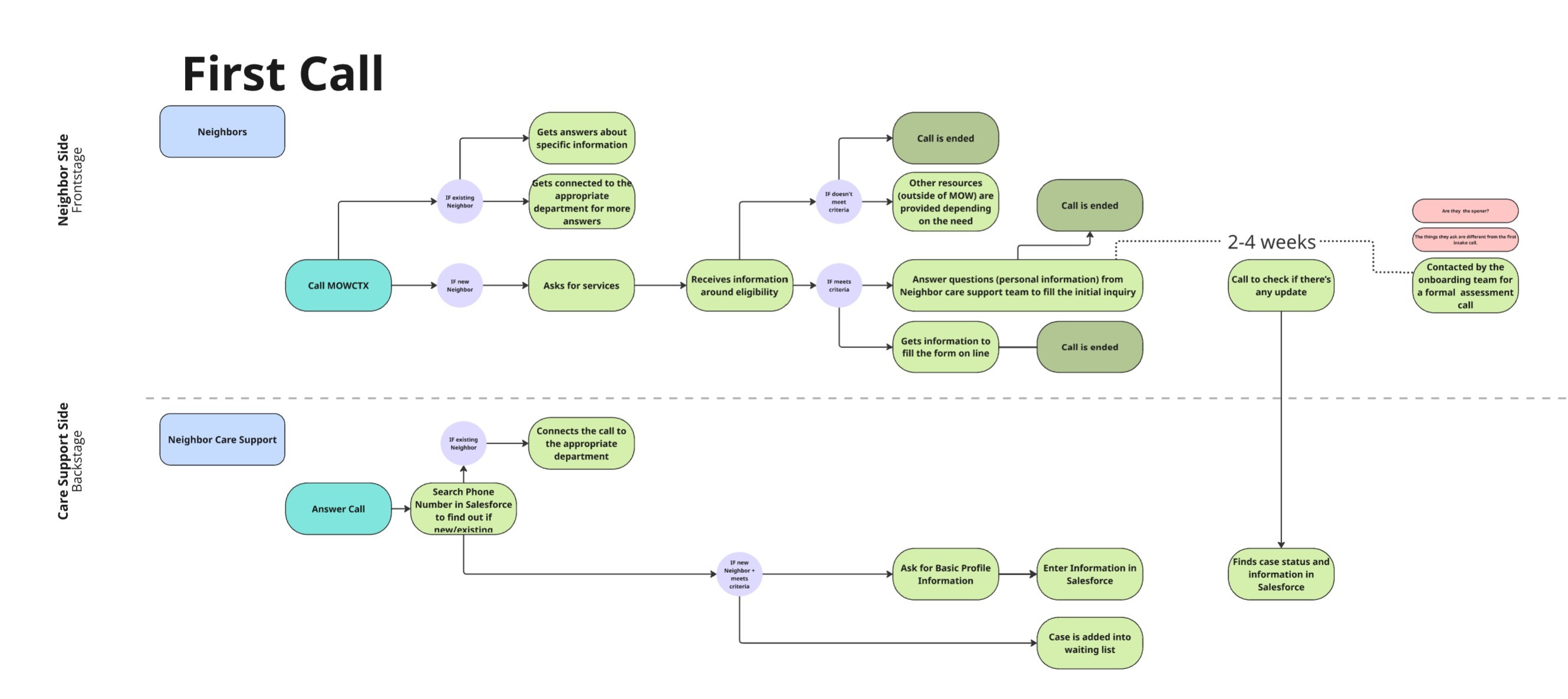
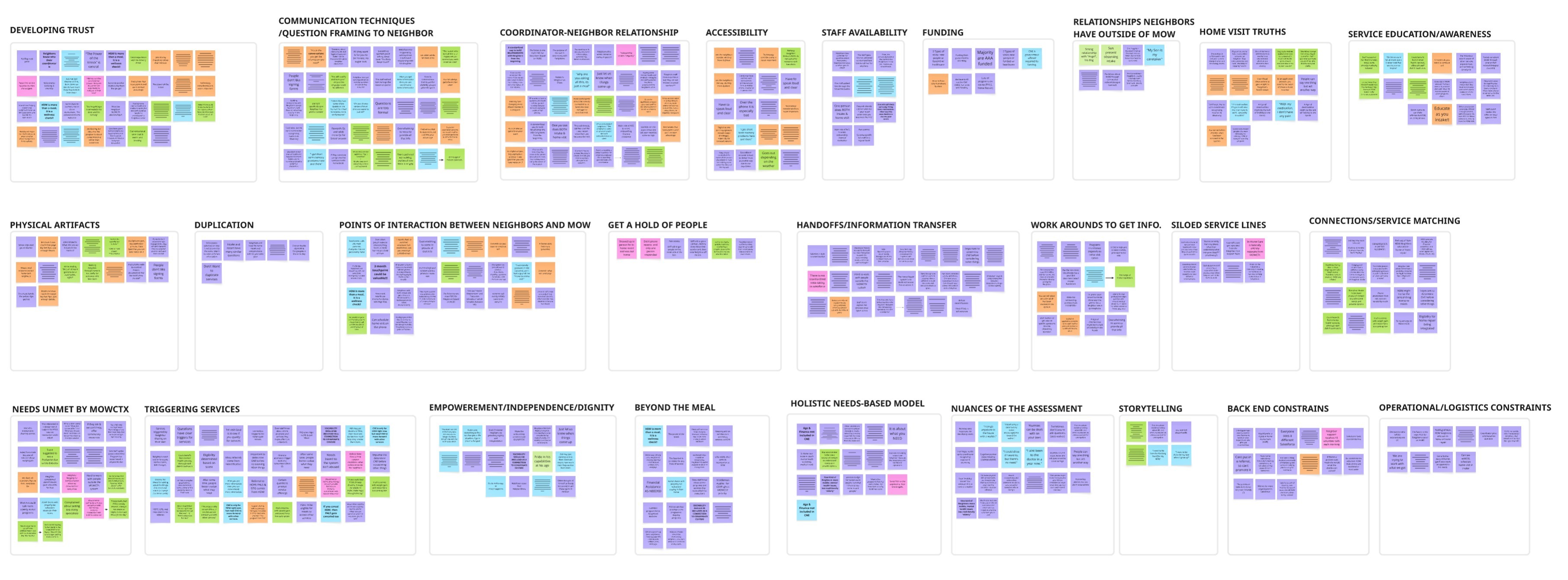
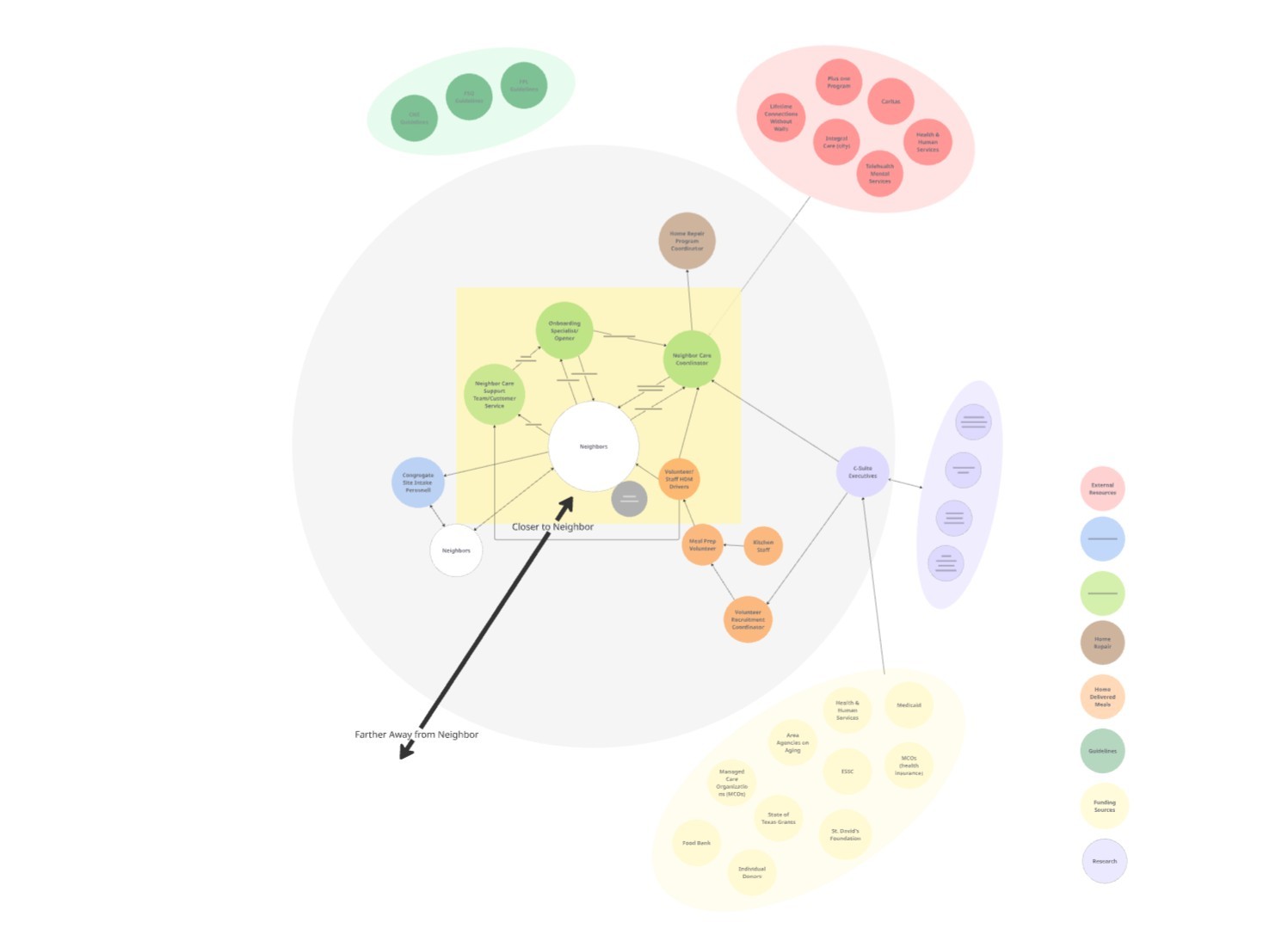
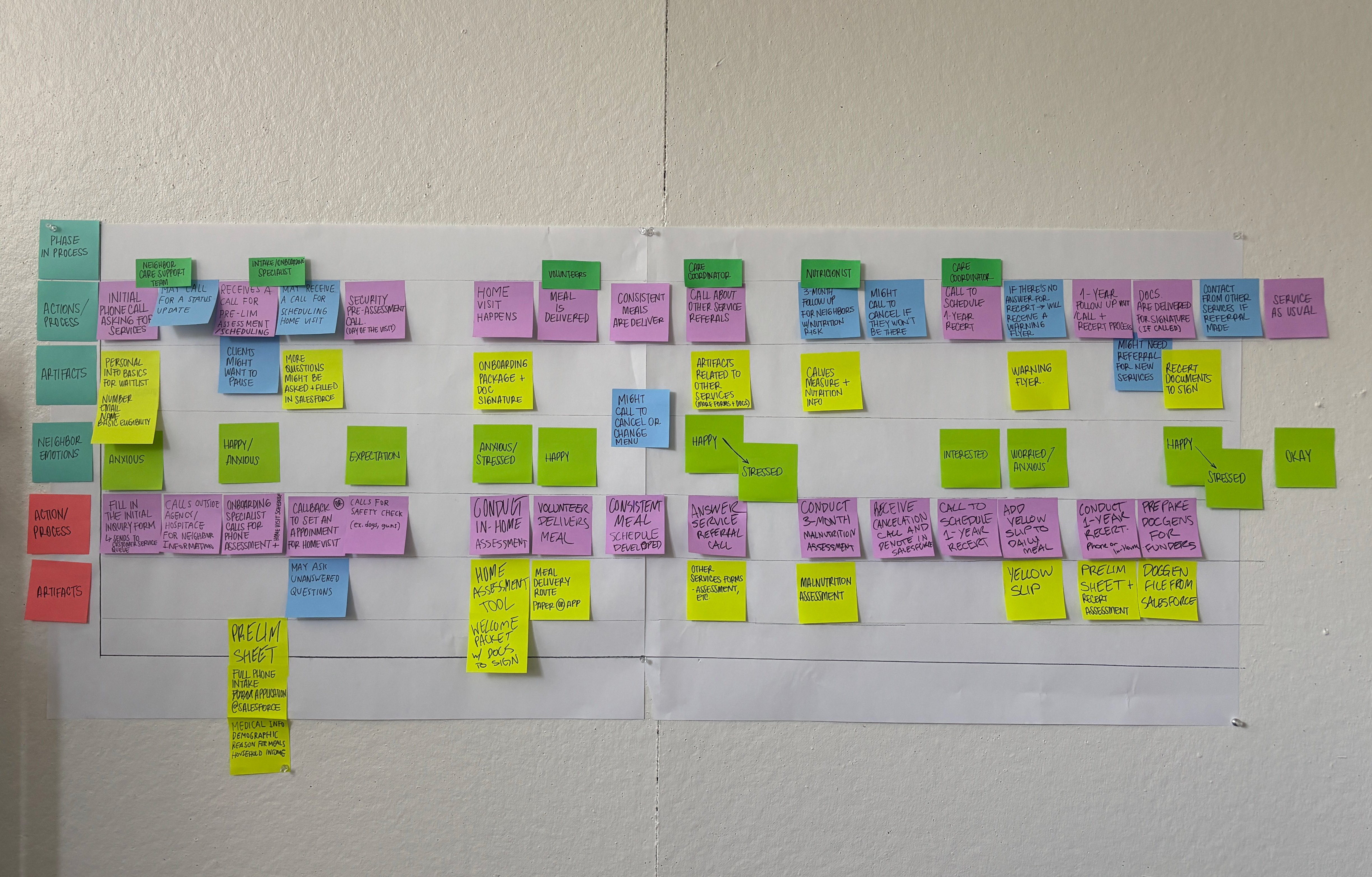
The process diagram mapped touchpoints and surfaced where interventions could have the most impact. Clustering our interview notes revealed that building the relationship between Neighbor and staff was the central thread throughout the intake journey. The stakeholder map exposed an abrupt handoff from the Onboarding Specialist to the Neighbor Care Coordinator with a gap for continuity of care. The service blueprint revealed an opportunity to gather richer context during the phone assessment, before the specialist ever enters the home.
INSIGHT #1:
Intake serves funder,
not Neighbors
MOWCTX's intake is structured around eligibility verification and the language required by its funders. This positions Neighbors as passive data points instead of active participants in their own care journey.
INSIGHT #2:
Prior context don't translate to home visit
The additional context gathered from the phone intake can provide an opportunity to personalize the home visit. But since the information is not easily interpretable, it becomes a duplicated process instead of an asset.
INSIGHT #3:
Hacks are hiding in plain sight
Staff have developed informal protocols to build trust with Neighbors, but these improvements stay with the individual. Service quality becomes person-dependent, not process-dependent, and is invisible and easy to lose.
WHere we intervened in the User Journey
INITIAL INQUIRY
Phone Assessment
HOME ASSESSMENT
SERVICE STARTS
RECERTIFICATION
DEliverable 01
Context Package
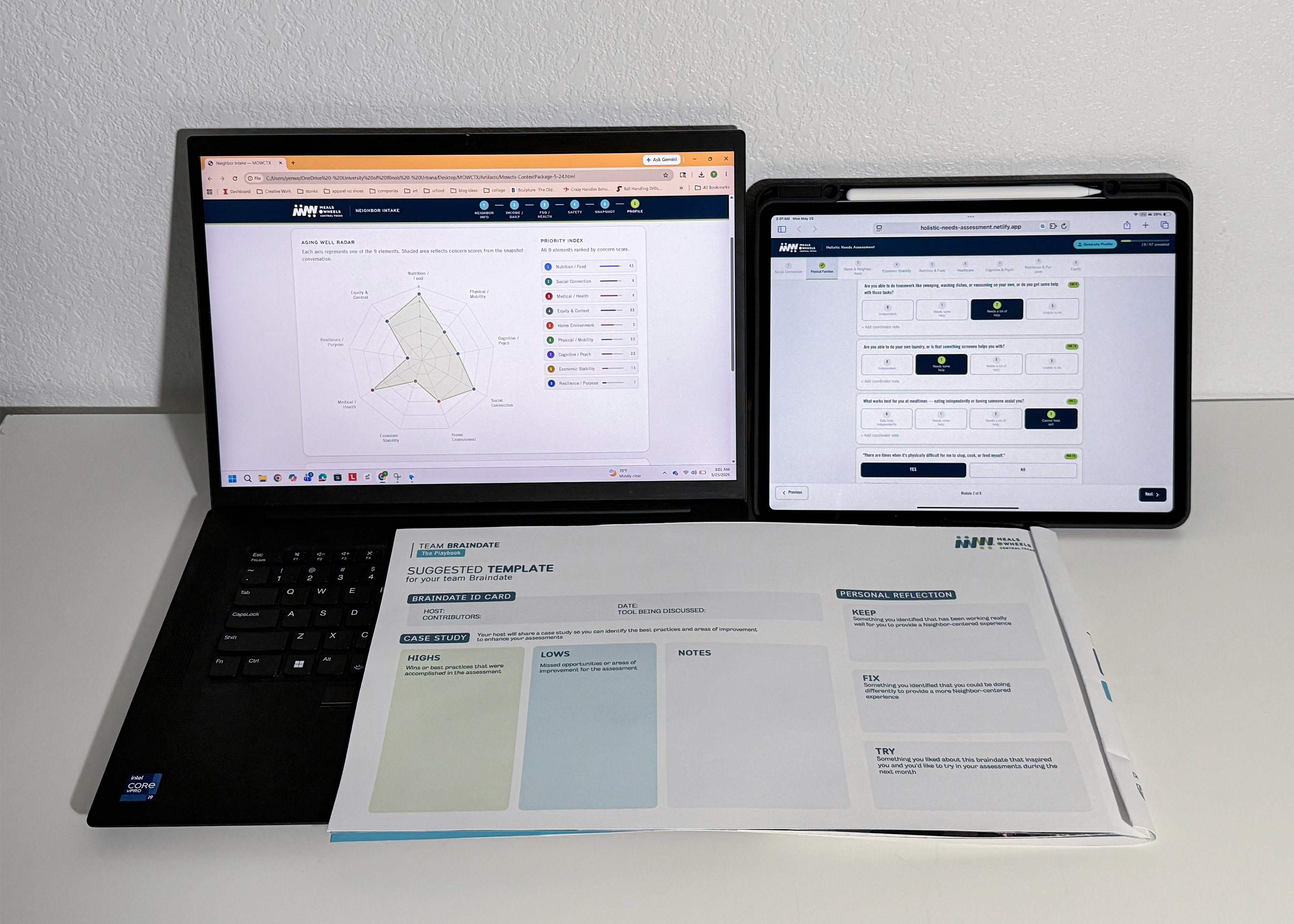
A pre-visit brief generated from the home assessment phone call that's designed to carry context across the handoff between phone assessment and home assessment. Instead of the specialist needing to organize the Neighbor context themselves, they arrive with a clear picture of what this Neighbor needs most.
9 Elements of Aging Questions
The first contact call shifts from an eligibility checklist to a structured conversation. One question from each of the 9 Elements of Aging — a holistic and validated tool to determine healthy aging, surfaces the Neighbor's needs through a subjective perception with the Likert scale.
Aging Well Radar & Module Priority
Responses generate a radar map and a ranked module list which becomes a portable snapshot of the Neighbor's health that the specialist takes into the home assessment. Instead of a generic assessment flow, they can focus on the modules that matter most to this specific Neighbor. The scannable nature of this printout allows the Onboarding Specialist to concentrate on interactions with the Neighbor while in the home.


deliverable 02
MedGuide
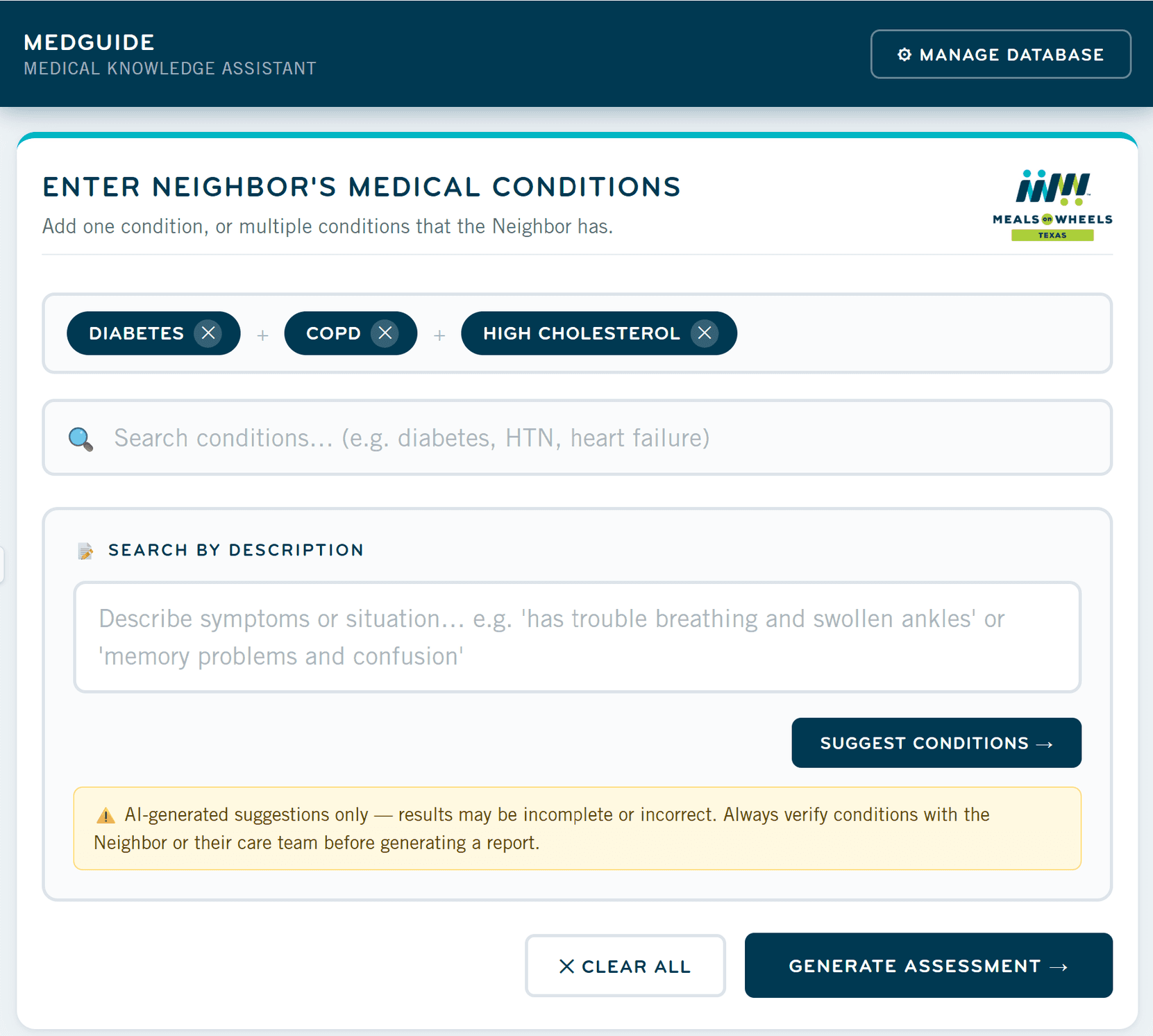
An AI-powered tool that gives Onboarding Specialists a working understanding of a Neighbor's medical conditions before they step into the home. MedGuide translates diagnoses into a clear picture of how conditions affect the Neighbor's wellbeing and their implications for care.
Enter one or a suite of conditions
Onboarding Specialists enter the Neighbor's conditions or describe symptoms in plain language. MedGuide then uses a clinically validated database and AI to generate an assessment report.
Comorbidity analysis
The assessment report includes a comorbidity analysis. MedGuide surfaces how a Neighbor's conditions interact, flagging warning signs a specialist wouldn't catch from a diagnosis list alone.
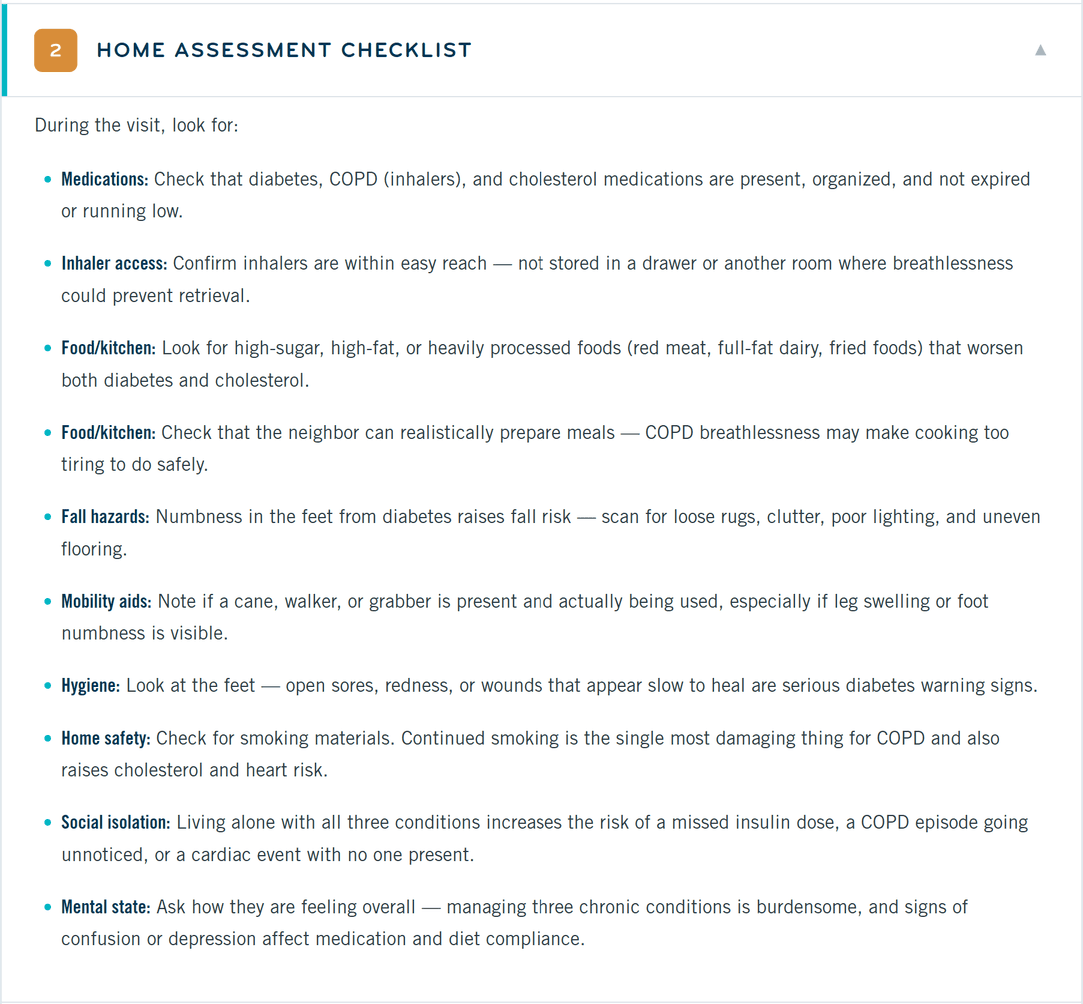
Tailored home checklist
The report also includes a printable checklist tailored to MOWCTX's assessment protocol so the specialist arrives prepared, not reactive.


deliverable 03
Module Based Assessment
A redesigned home assessment that wraps the organization's clinically validated tools inside the 9 Elements of Aging Framework. This new assessment format supports a more conversational intake that doesn't jump around topics, and pairs directly with the Context Package. It also supports MOWCTX's transition to an Aging Well organization that provides increasingly diverse services beyond meal delivery.
Modules organized by Elements of Aging
Each module is a focused conversation anchored to one of the 9 Elements of Aging. The Neighbor experiences a single flowing intake while the specialist gets a structured assessment. This new assessment is designed for the iPad, where unanswered questions have a red border and each module receives a checkmark once completed. This digital format provides specialists the flexibility to move between modules while conducting a complete assessment.
Auto-generated Neighbor profile
After the assessment is complete, responses roll up into a Module Index ranked by concern score. The Neighbor Care team inherits a clear picture of what matters and where to start. Results automatically populate in Salesforce, eliminating the need for manual data entry.



deliverable 04
BrainDates
A monthly structured workshop that turns staff experience into organizational memory. The Onboarding and Neighbor Care teams share what's working, what's not, and what to try next so that best practices stop living in individual heads and start shaping how the whole team works.
Actionable Team Playbook
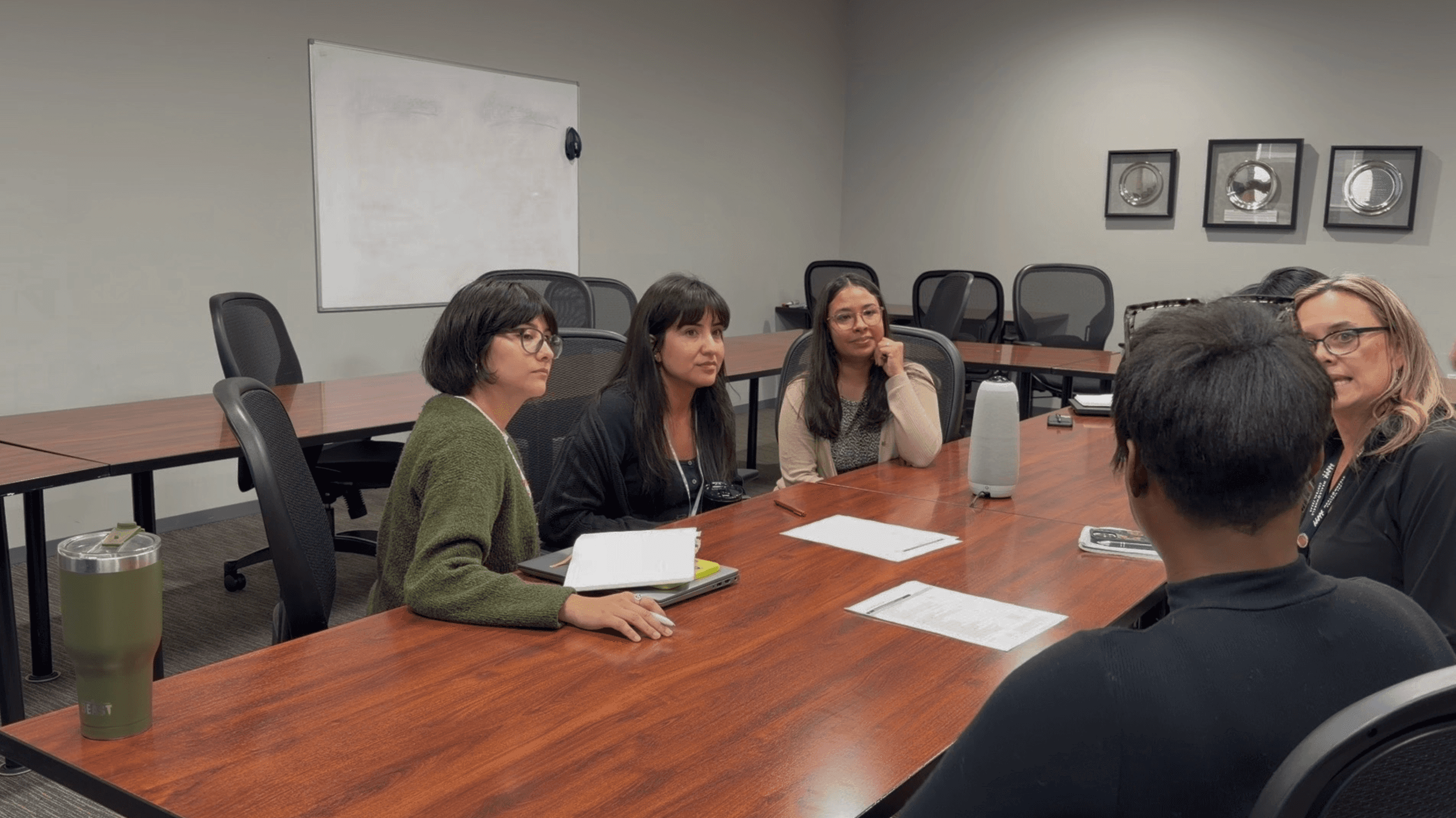
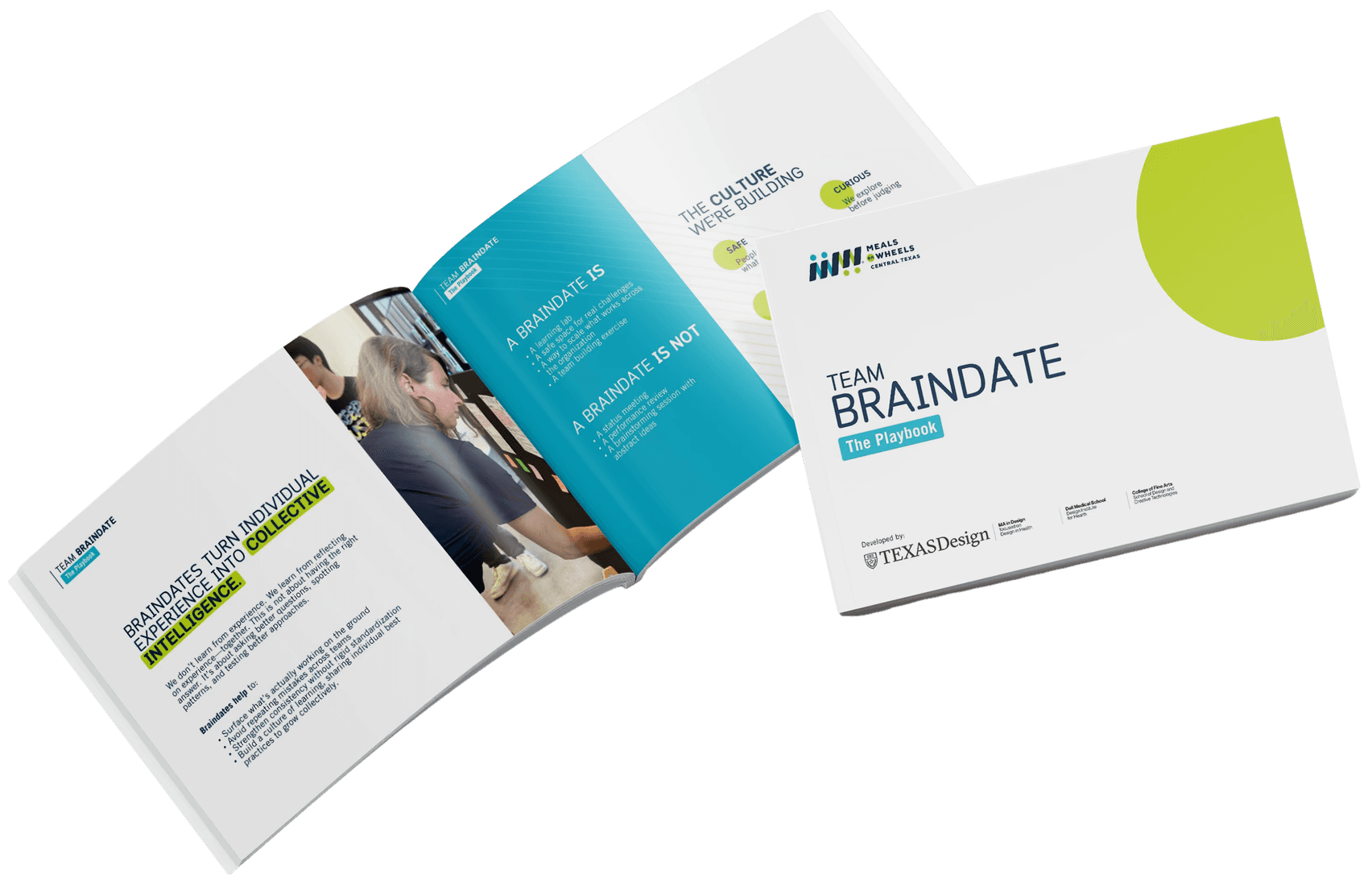
The Team Playbook is a guide for the BrainDate that structures each session with clear prompts, shared expectations, and roles. The Host brings a specific case study to the group, while the Contributors help unpack the case and expand thinking. The Playbook ensures that the team arrives focused and leaves with concrete takeaways, not just conversation.
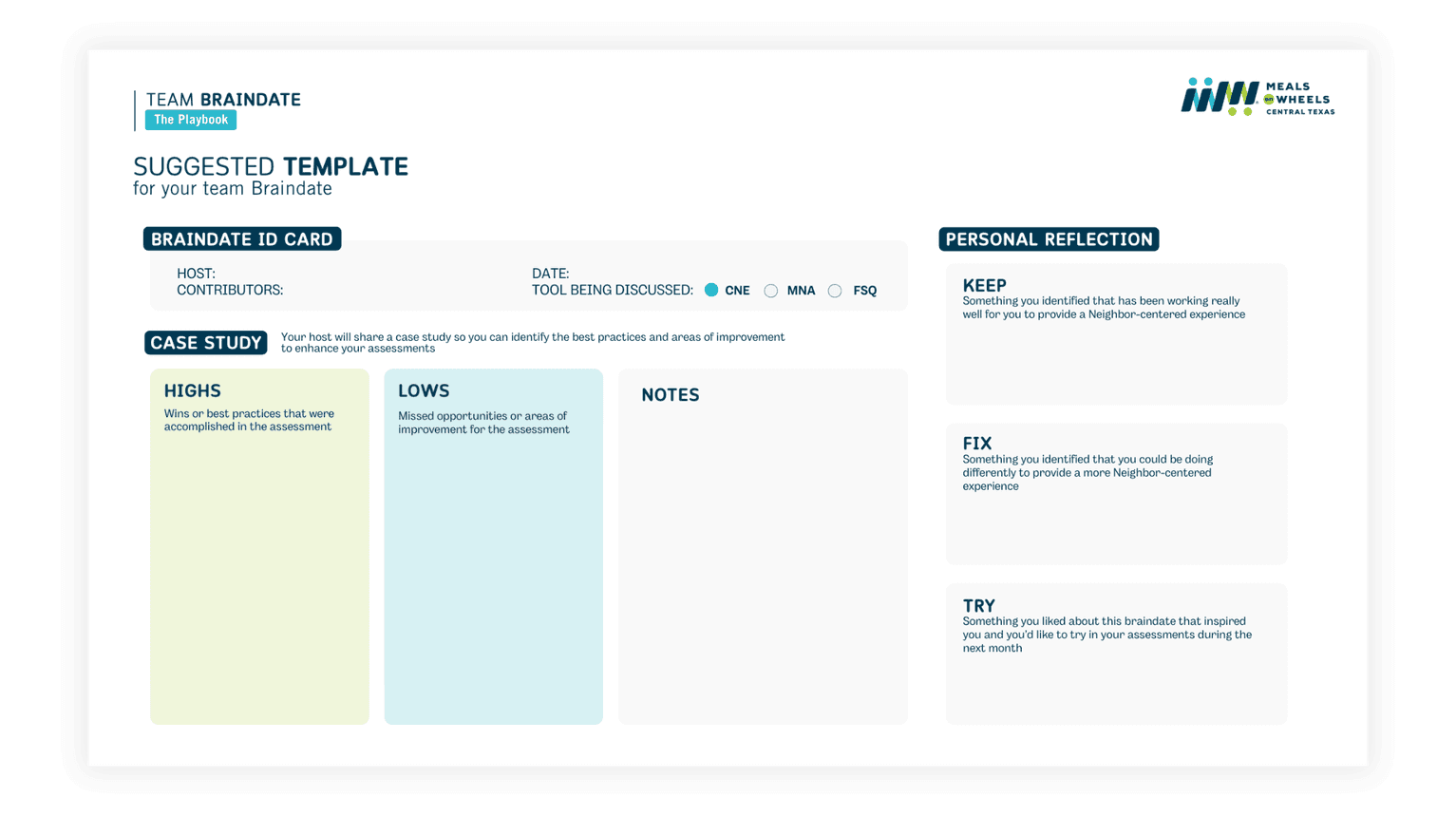
Structured sessions
Each BrainDate runs a Highs / Lows / Notes flow paired with a Keep / Fix / Try reflection. This converts individual anecdotes into shared norms that the whole team can act on. Each session generates a BrainDate report: a record of shared learnings that builds the organization's memory over time.
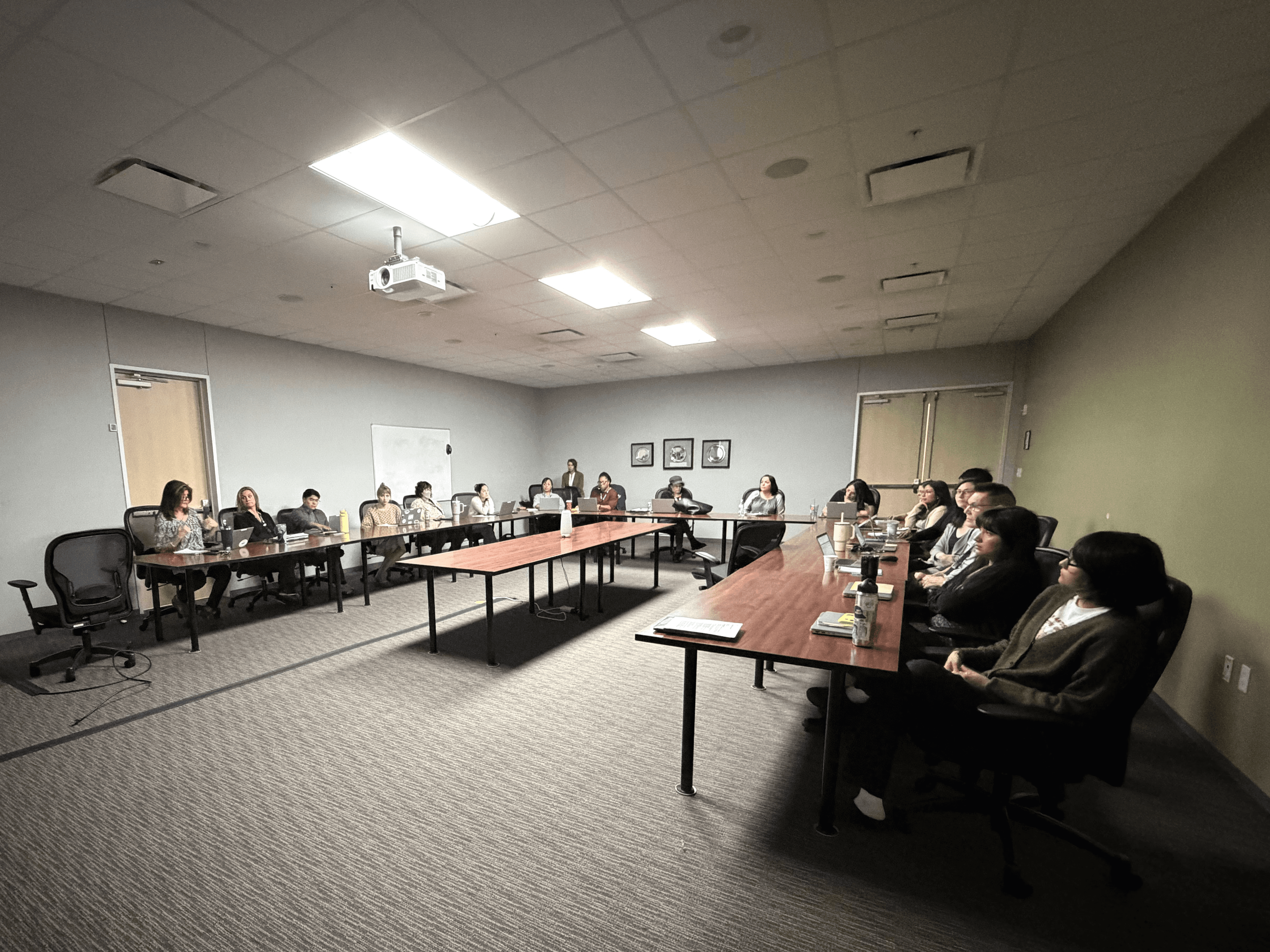
"This is a game changer!"
-Neighbor Care Manager
Reflection
One of the challenges we had during this project was dealing with scope creep. One of our additional concept was utilizing volunteers and a Neighbor survey for additional information collection. Due to the time and effort of prototyping this concept, we decided to move it into a future roadmap that would be included with the deliverables. This taught me how to collaborate with my teammates and clients on prioritizing concepts.
Special Thanks
Seanna Marceaux
MOW Staff
Tamie Glass
Tracy DeLuca
Natalie Privett
This portfolio is not available for mobile yet.
Please view on a computer!