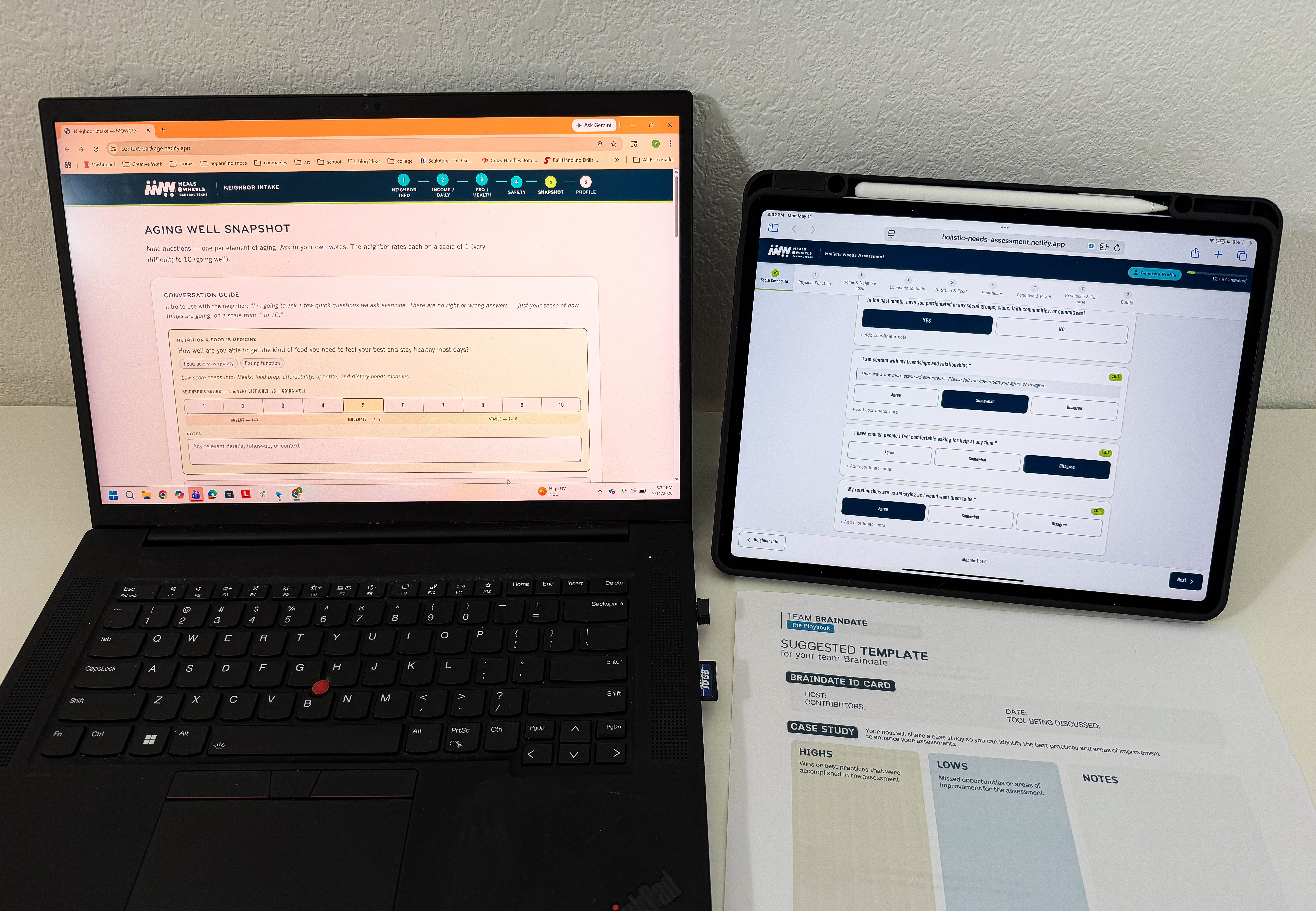
Intake Redesign for Meals on Wheels
JAN 2026
4 MONTH PROJECT
Transforming MOWCTX to A Wholistic Aging Organization
As the Meals on Wheels of Central Texas transitions into a wholistic Aging In Place organization, they reached out to our team to redesign their intake experience to be centered around a user-first approach that builds relationship yet remains validated for their funders


Fieldwork
Interviews
Mapping
Agentic Coding
Problems
Needs finding depend on staff capability
Intake is centered around funding eligibility based tools
No way for organization to internalize staff's best practices
Outcomes
A new prioritization tool for the staff and an AI-powered medical guide
A redesigned home assessment around a wholistic aging framework
A structured guide for monthly staff discussions around best practices
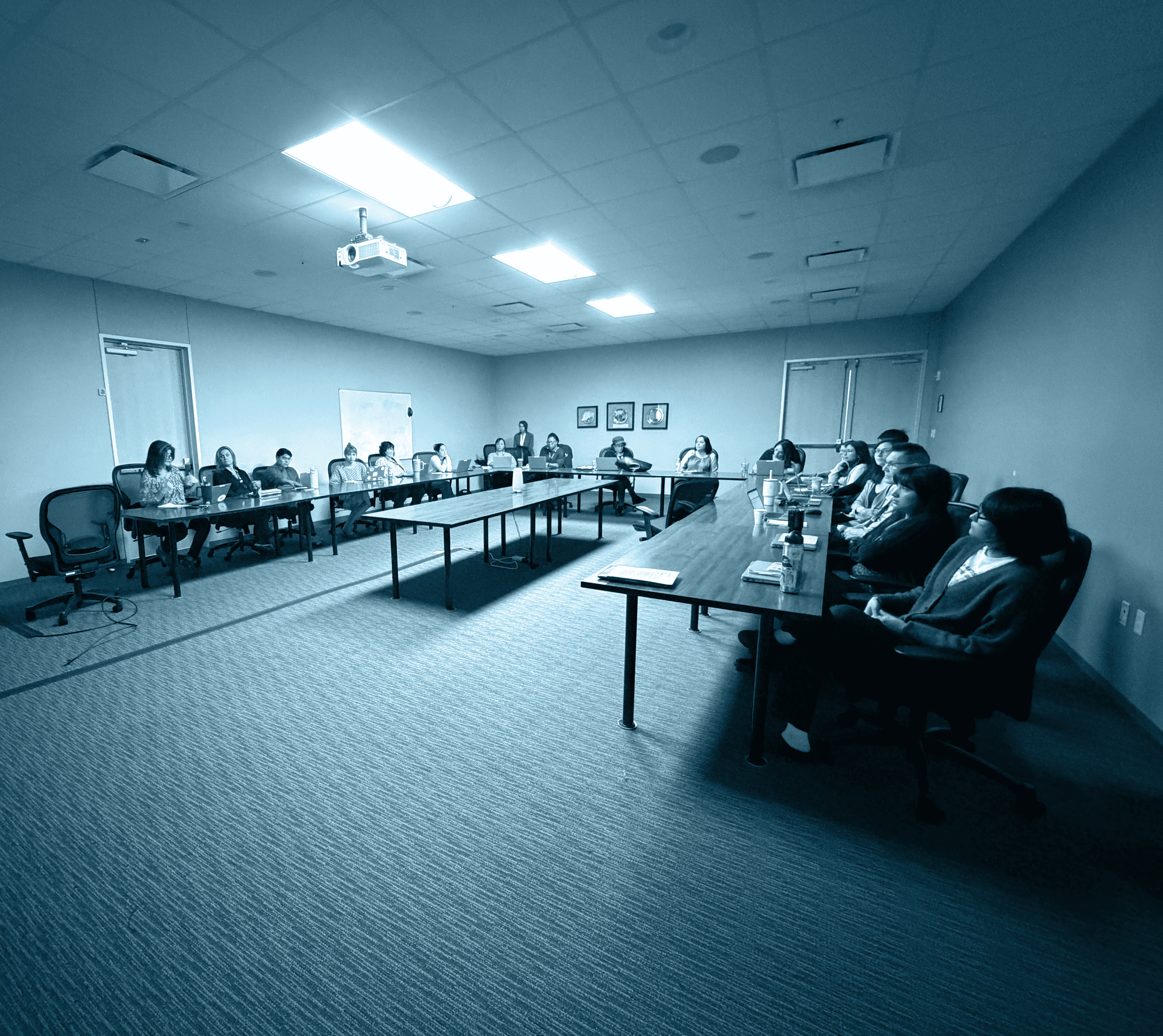
"These tools are a game changer!"
deliverable 01 / Context
Context Package
A tool that enables a tailored pathway to facilitate a focused and concise home assessment interaction by giving strategic recommendations on specific areas of the assessment to focus on when the onboarding specialist goes into the home.
"It helps to know what areas to focus on for the in-home assessment."
— Onboarding Specialist
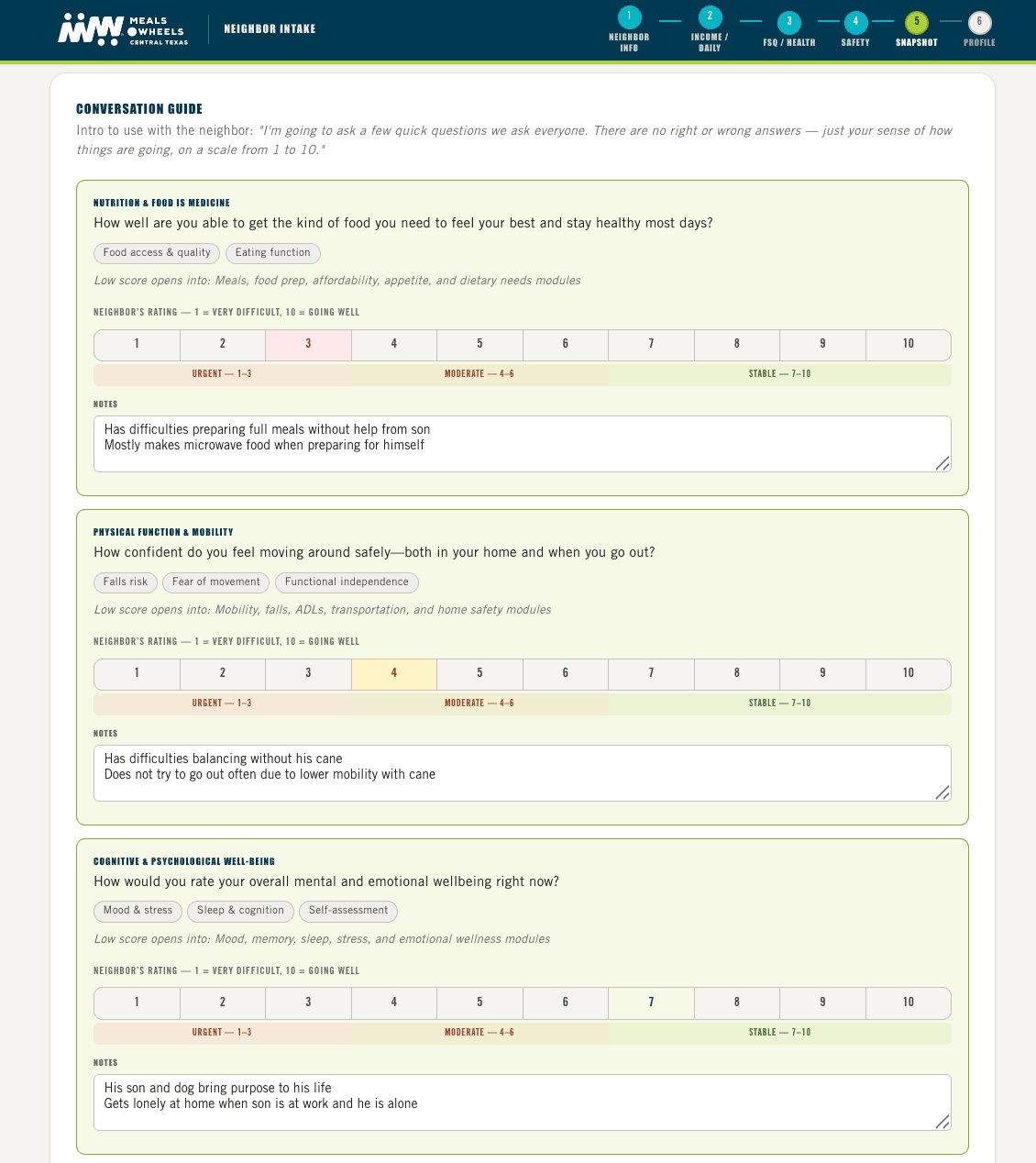
Aging Snapshot Questions
Phone-intake conversation seeded with the 9 Elements of Aging, scored on a 10-point Likert scale.
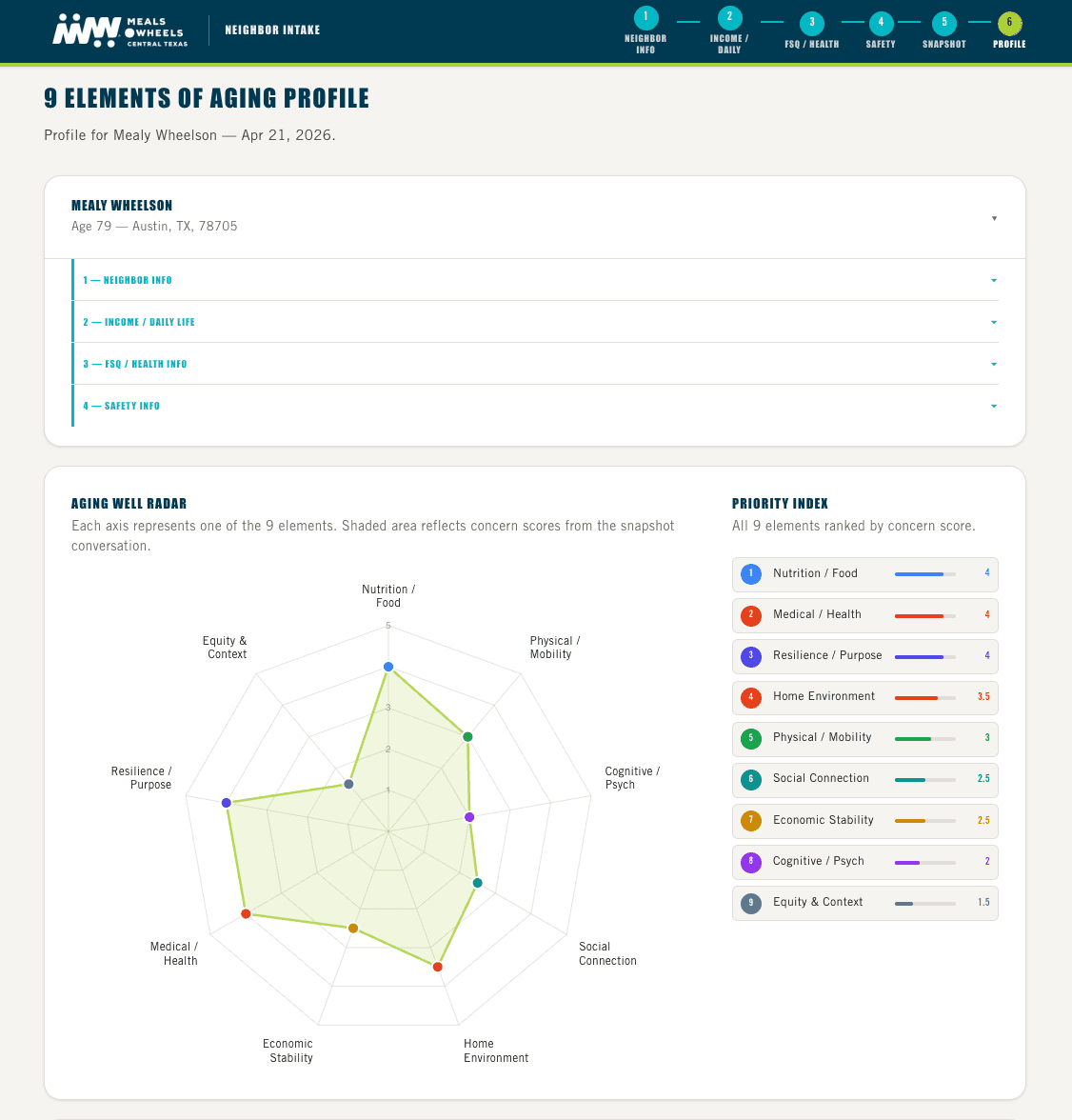
Aging Well Radar & Module Priority
A visual profile of the Neighbor that surfaces a recommended order of modules for the home assessment.
deliverable 02 / Context
MedGuide
An AI-assisted tool that provides complementary medical context to enrich the Neighbor profile and the specialists' understanding of how conditions affect wellbeing and what services Neighbors may need.
"How do these conditions influence what services we connect them to, so we can impact wellbeing holistically?"
— Onboarding Specialist + Neighbor Care Coordinator
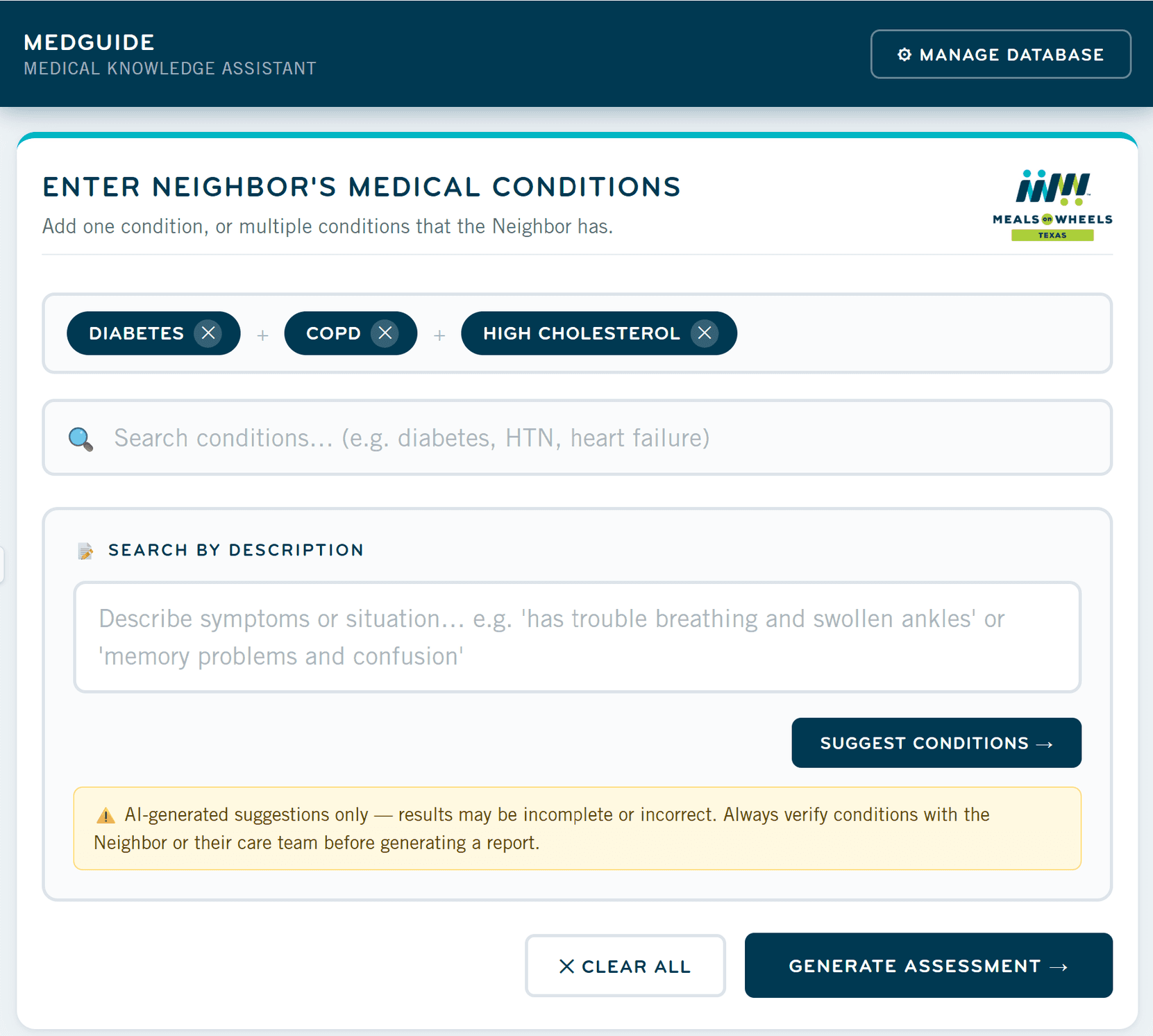
One or a suite of conditions
Add multiple conditions, or describe symptoms in plain language. The tool maps them to clinical context.
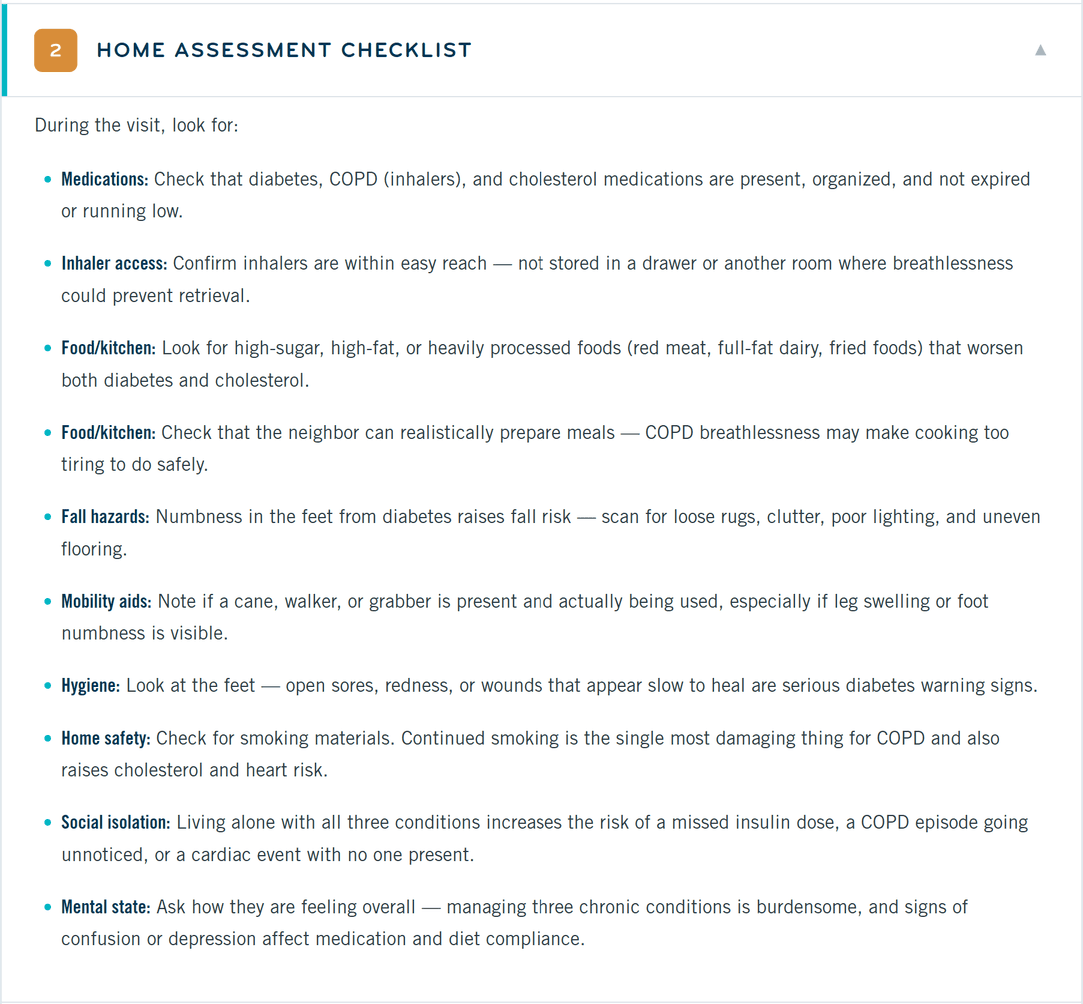
Tailored home checklist
Each condition surfaces a focused checklist for the in-home visit — from inhaler access to fall risk and dietary needs.
deliverable 03 / Assessment
9 Elements of Aging Home Assessment
New logic that reorganizes the clinically validated tools of the home assessment into modules based on the 9 Elements of Aging — making intake more conversational. It auto-repopulates Salesforce and streamlines the workflow from the Context Package.
"Other things are going on in my life beyond my need for consistent meals."
— Neighbor

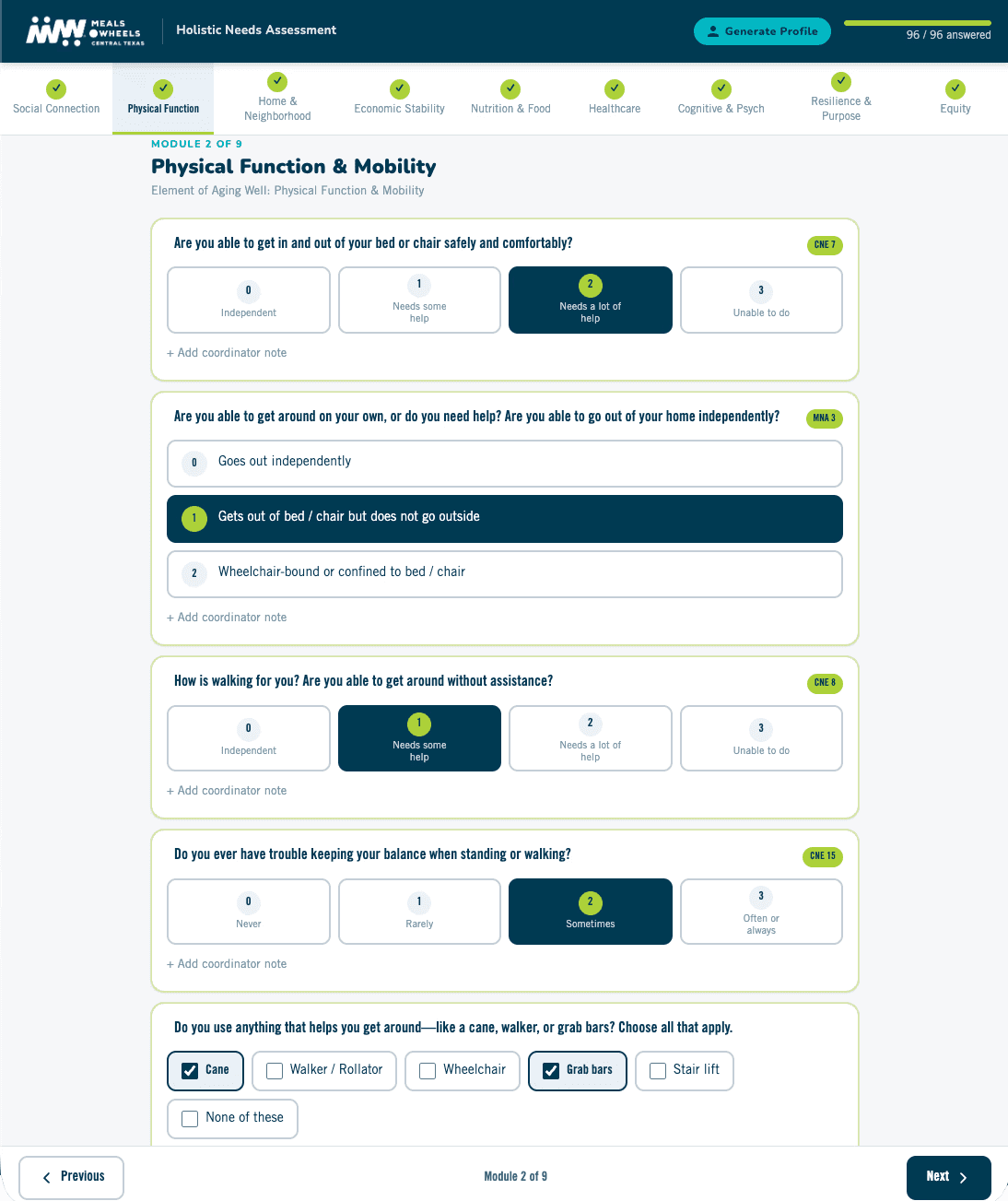
Modules organized by 9 Elements of Aging
Each module is a focused area of aging (ex. physical function, nutrition and food, etc). Tool IDs (CNE, NRA, MNA, FSQ) stay traceable in the background.
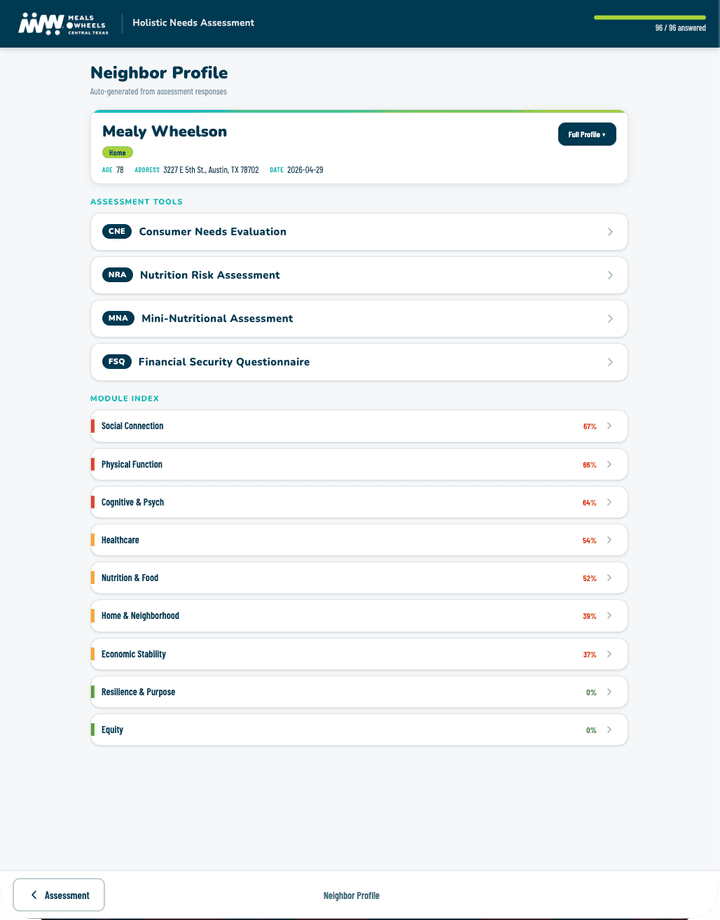
Auto-generated Neighbor profile
Responses roll up into a Module Index ranked by concern score — handing the next coordinator a clear picture of what matters. The Neighbor profiles updates at the recertification for outcome data.
deliverable 04 / Collaboration
BrainDates
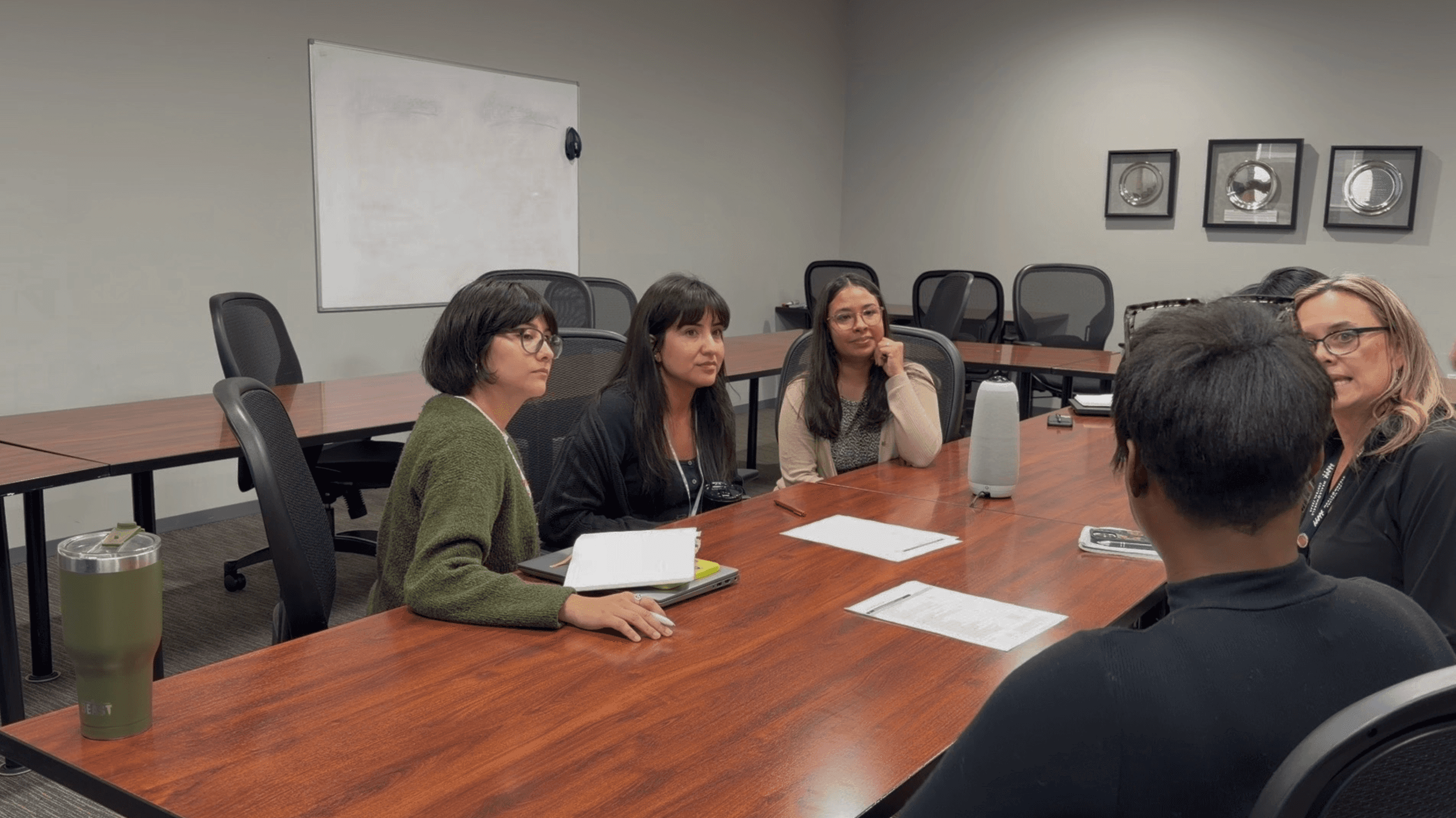
A structured team conversation designed to turn real experiences into shared learning. It generates actionable insights each team member can apply, contributing to a more human-centered experience for both Neighbors and staff.
"I've seen the difference when I guide the question in this way."
— Onboarding Specialist + Neighbor Care Coordinator
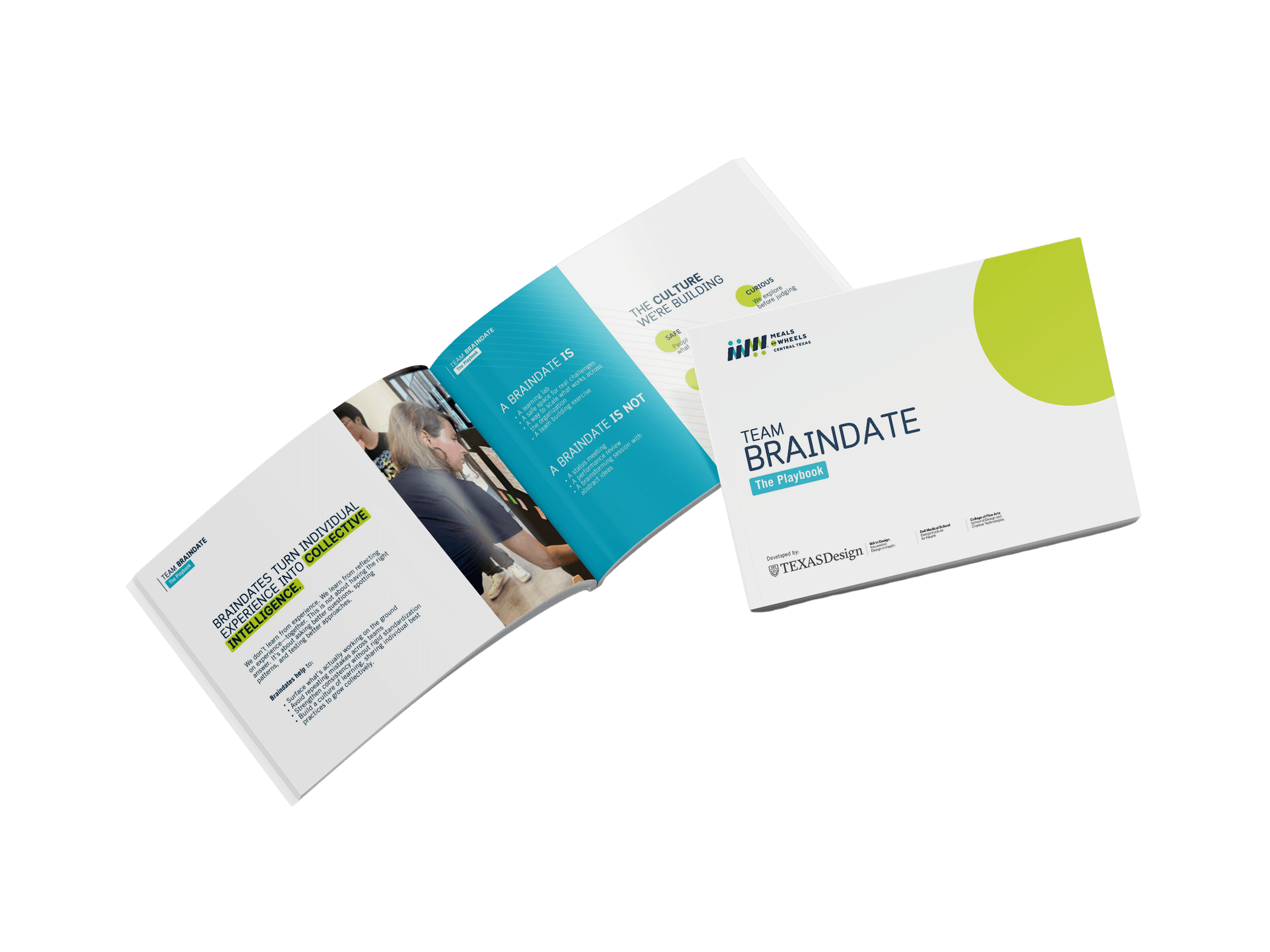
Actionable Team Playbook
A booklet that sets the intention and expectations for each session so the team walks in aligned and walks out with shared next steps.
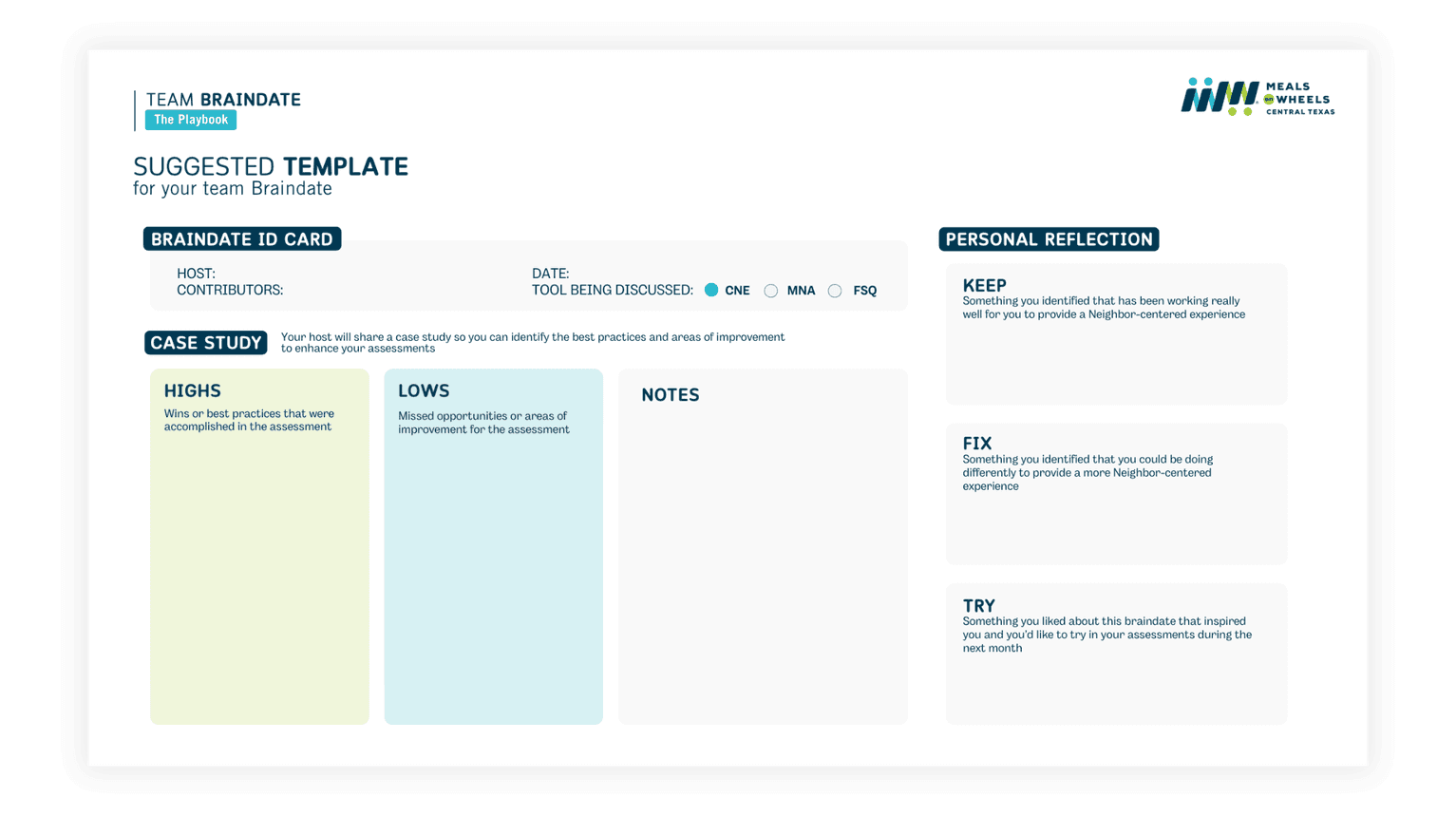
Structured sessions
Each Braindate follows a Highs / Lows / Notes flow paired with a Keep / Fix / Try reflection — turning anecdotes into shared practice.
The Process
Immersive Research
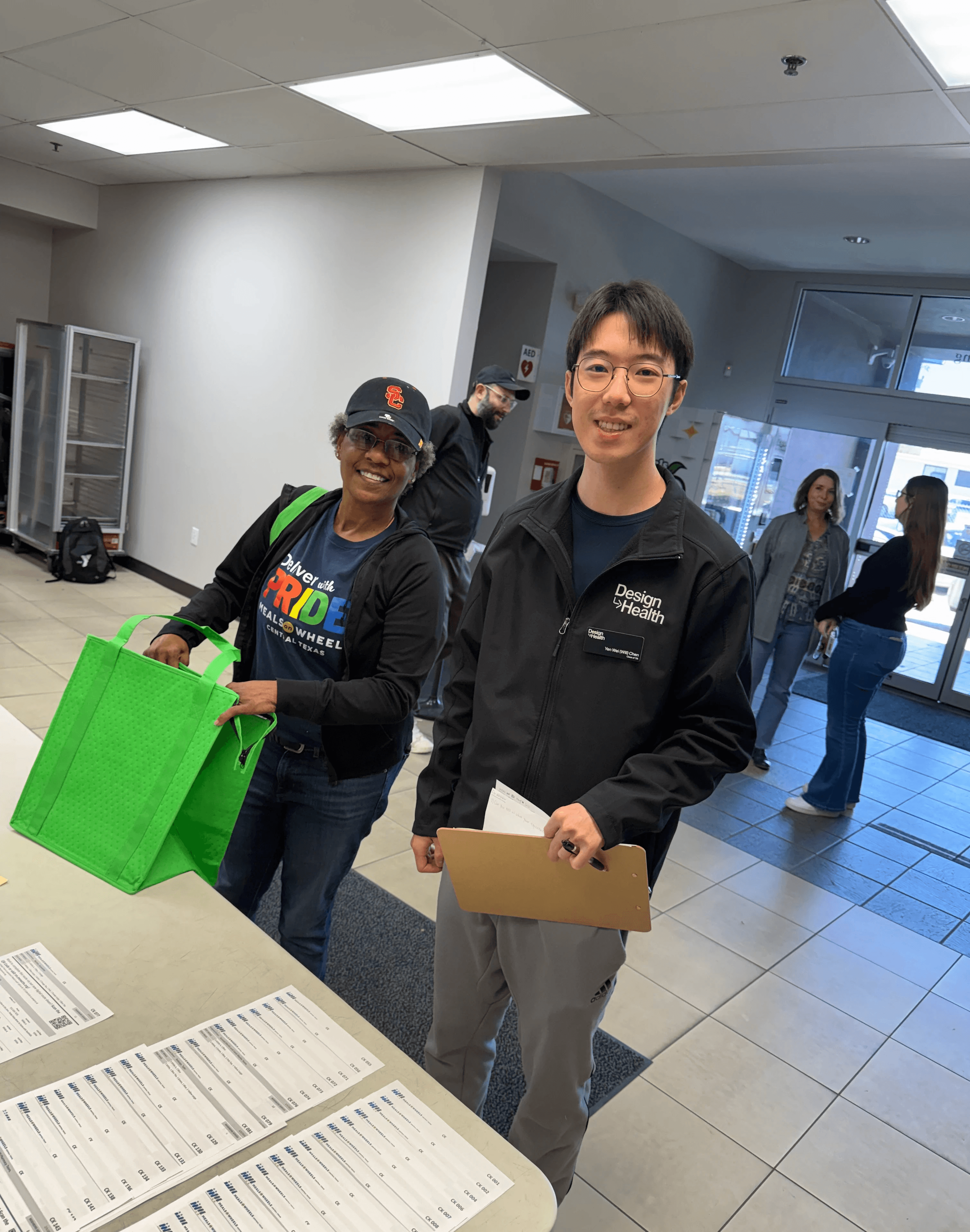
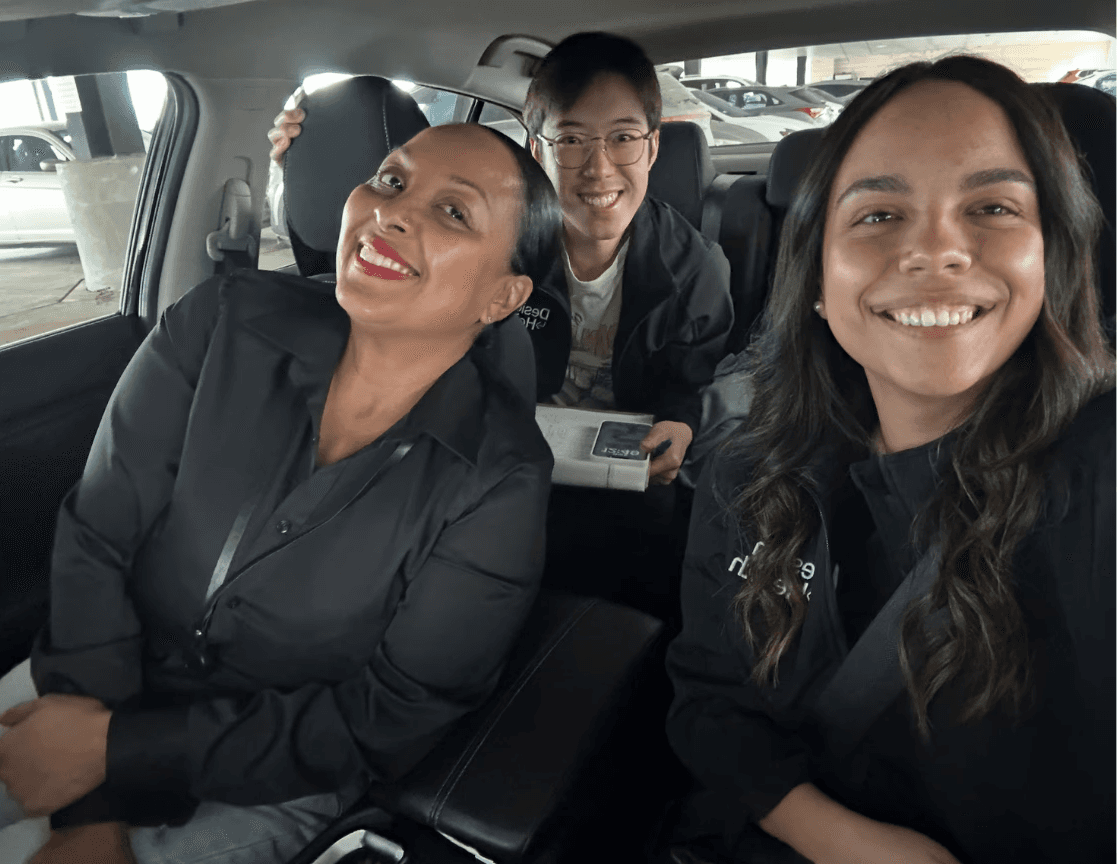
It was very important for us to be immersed in the research process. Each of us shadowed a volunteer on their meal delivery route, phone assessments, home intake assessments, and the one year recertification. We were at the MOWCTX office to interview stakeholders who conduct the user intake to understand their needs and expert guidance. We also conducted self-ethnographic research to understand the process of applying for service.
Outside of the MOW organization, we talked to SMEs involved in social work and nutrition to understand analogous industries and how that could apply to our case.
The Process
Untangling Complexity
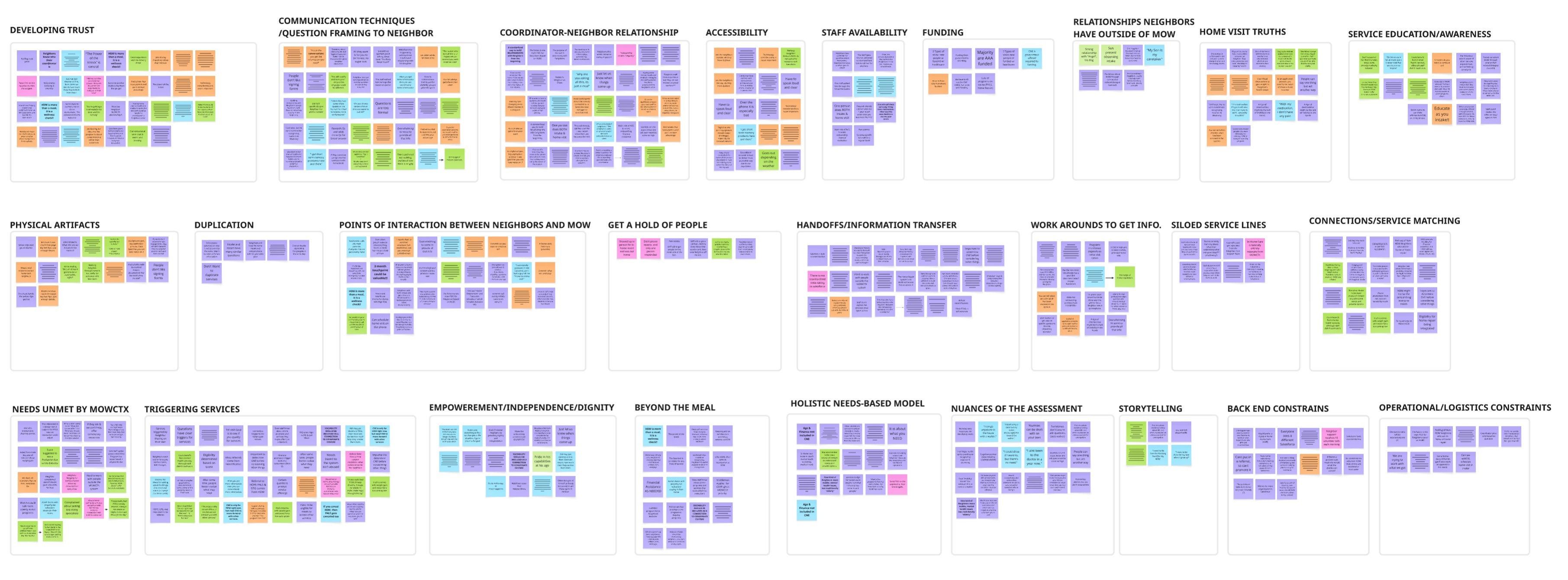
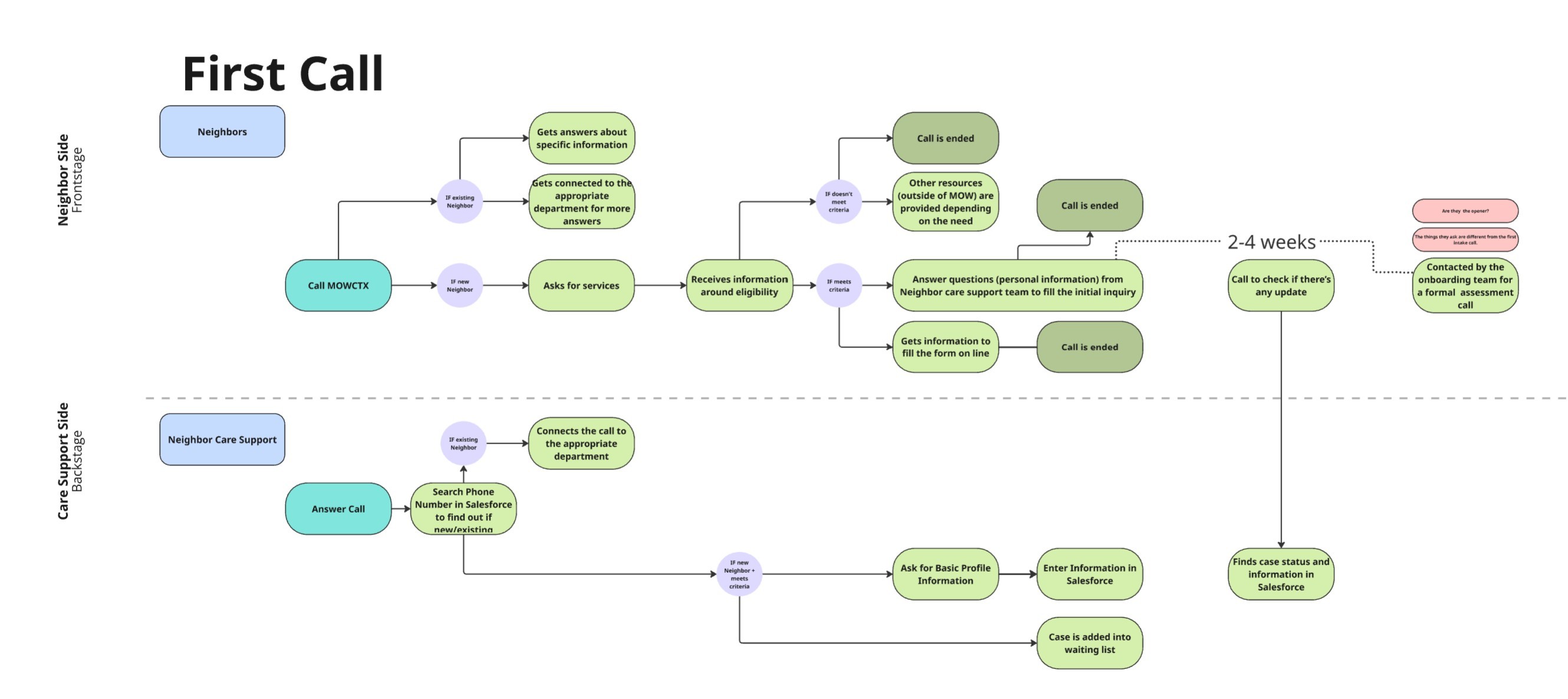
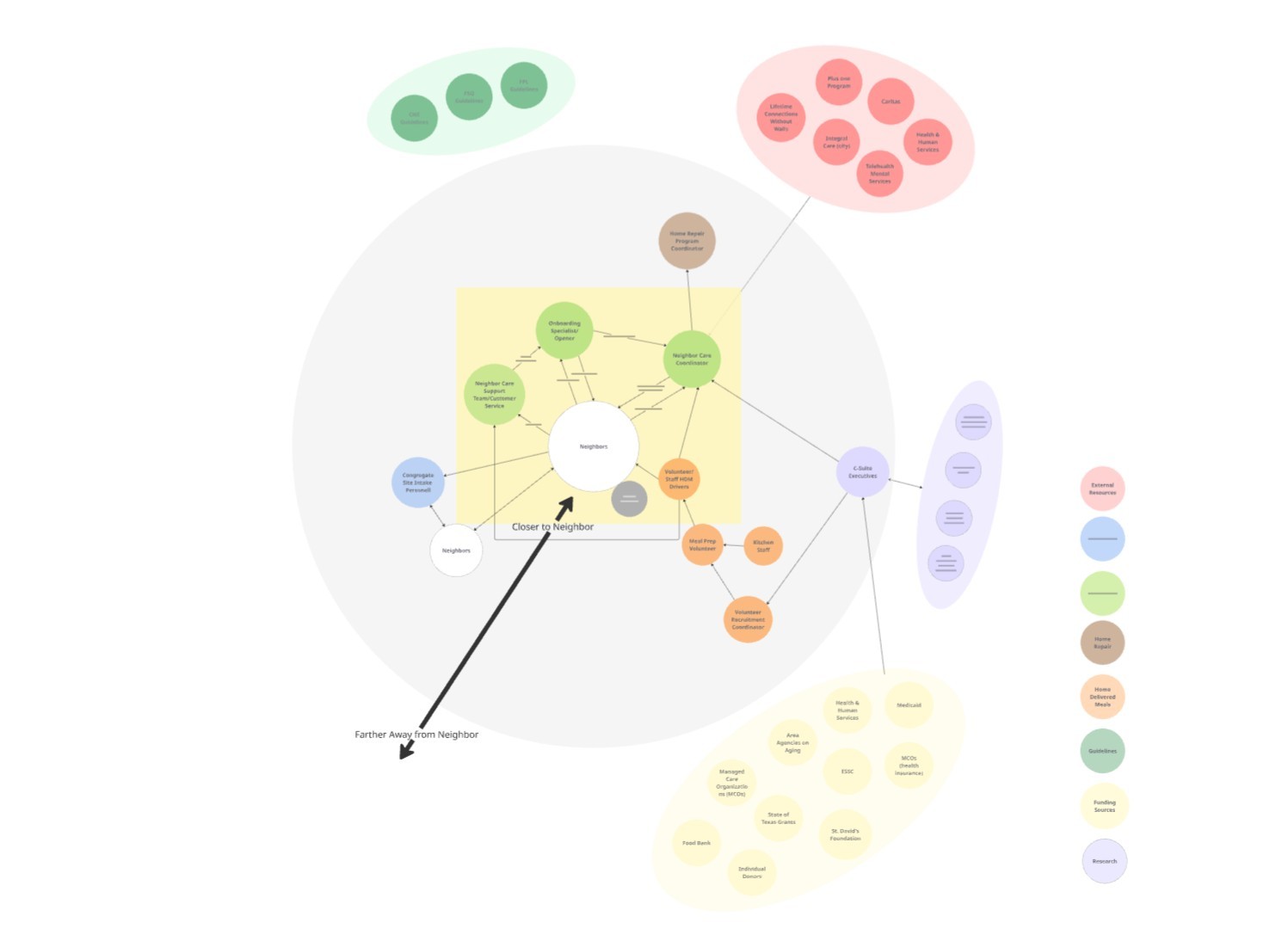
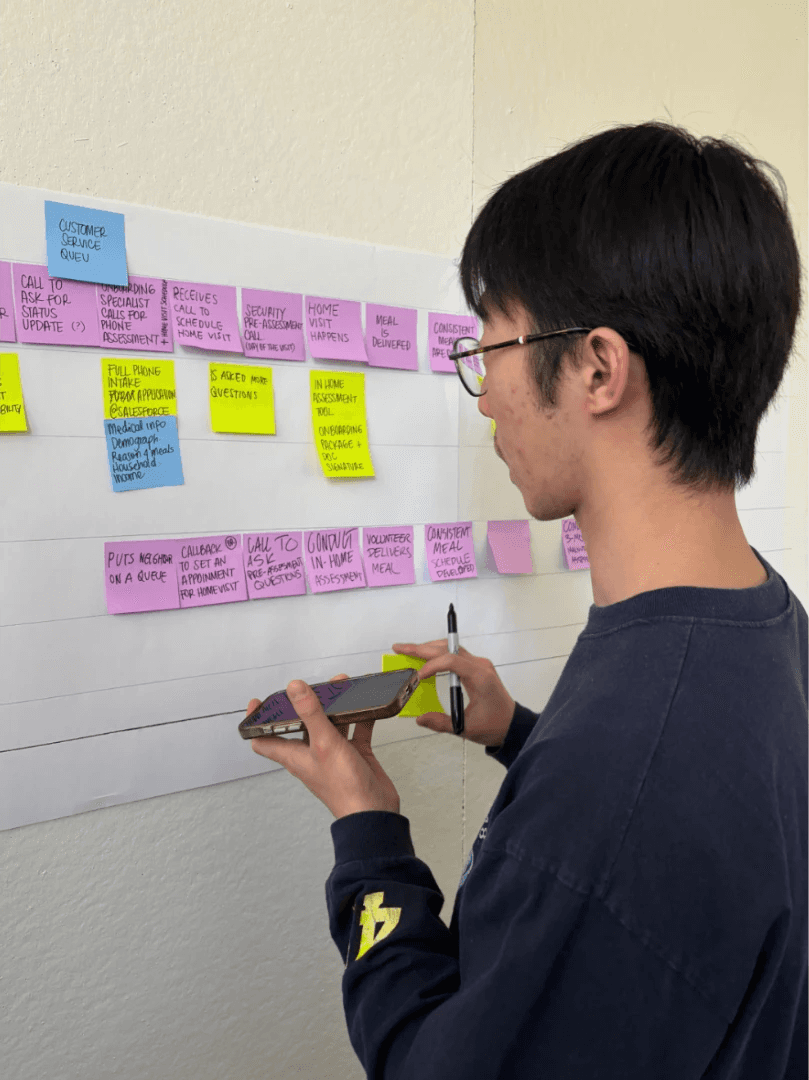
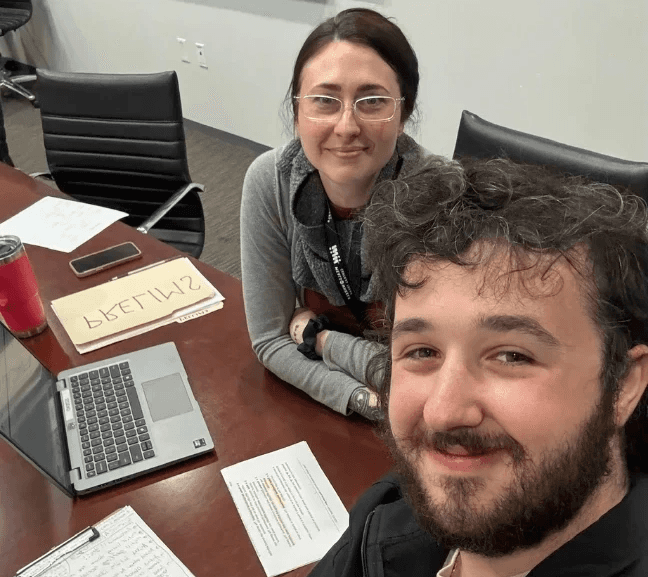
We used a variety of techniques to synthesize and understand our research findings. First, grouping and sorting our interview notes into different clusters. Using process maps to understand points of intervention we can target. Using stakeholder mapping to understand the responsibilities of different role in reference to the end user, and developing a user journey blueprint to conceptualize our understand of the entire process for various stakeholders.